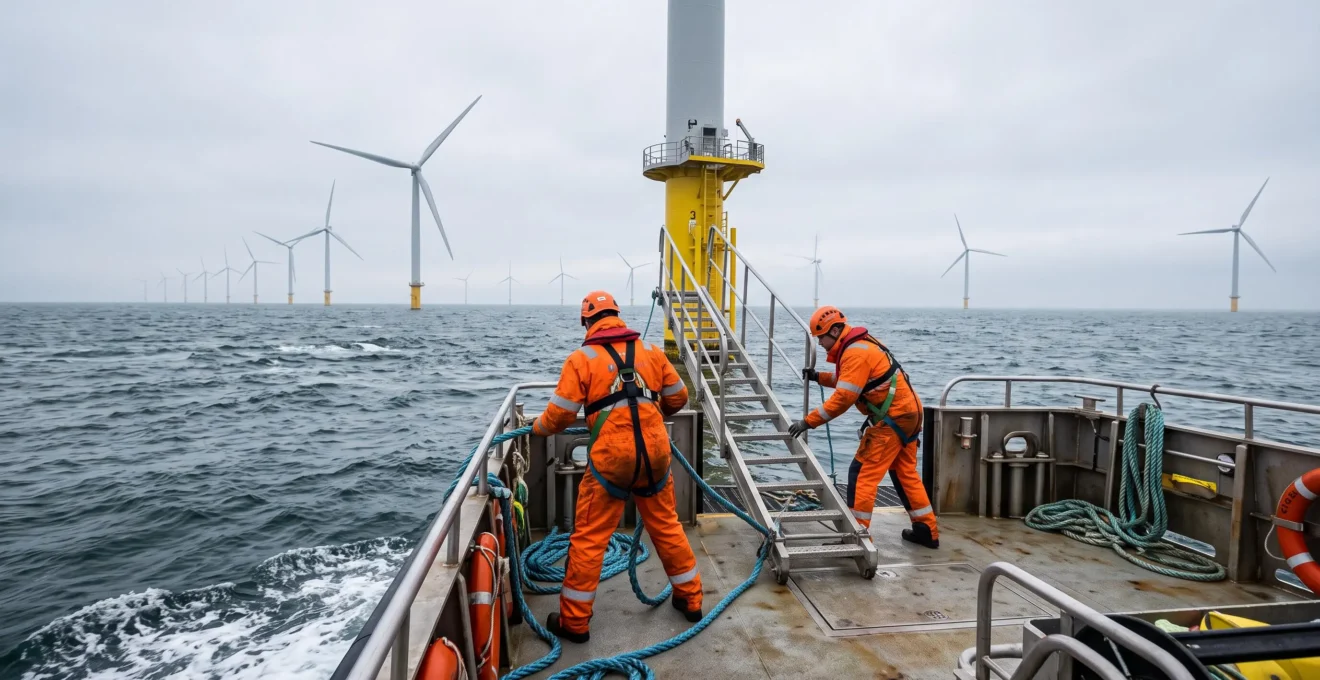
The strongest UK-Canada renewable energy opportunities are not necessarily the largest announced projects. They are the areas where proven British capabilities can solve specific Canadian development challenges, or where Canadian resources and technologies strengthen UK energy supply chains.
Offshore wind engineering, battery storage integration, renewable electricity project development and critical-minerals supply chains offer distinct routes into bilateral business. Carbon capture and storage presents a related opportunity for companies working in industrial decarbonisation, although it is not itself a renewable electricity technology.
The commercial case depends heavily on location, procurement rules, grid access and the structure of the proposed partnership. Canada’s provincial electricity markets can differ substantially, while the UK’s established offshore wind industry creates opportunities for specialised engineering and service providers.
For investors, developers and technology suppliers, the central question is therefore not simply which market is growing. It is where a company’s existing expertise addresses a verifiable need, with a credible customer, workable regulatory route and financeable project economics.
UK-Canada renewable energy opportunities at a glance
- Technology fit matters: UK offshore wind and engineering expertise may transfer to Canadian coastal developments, while storage and hybrid systems create opportunities for specialist suppliers.
- Provincial conditions determine viability: procurement, grid access, electricity prices and permitting should be assessed before committing significant capital.
- Partnerships and financing must follow the project: local capabilities, reliable revenues, regulatory approvals and infrastructure access matter more than broad clean-energy commitments.
- Why Does Renewable Energy Offer Strong Potential for UK-Canada Collaboration?
- How Can Businesses Evaluate Renewable Energy Opportunities Across Both Markets?
- Wind, Solar or Energy Storage: Which Opportunity Fits Your Expertise?
- The Project Risks That Can Undermine Cross-Border Renewable Energy Expansion
- When Should a Clean-Energy Project Seek a UK or Canadian Partner?
- How Can Investors Assess a Cross-Border Green Finance Opportunity?
- The Infrastructure Risks That Can Stall a Carbon Capture Project
- How Can Carbon Capture Create New UK-Canada Business Opportunities?
Why Does Renewable Energy Offer Strong Potential for UK-Canada Collaboration?
UK-Canada renewable energy collaboration offers commercial potential because the two countries have complementary resources, industrial capabilities and financing expertise. The UK brings experience in offshore wind development, marine engineering and energy markets, while Canada offers substantial hydroelectric resources, diverse renewable energy conditions and critical-minerals supply opportunities. Successful collaboration depends on matching these strengths to specific projects rather than treating either country as a uniform market.
The UK’s offshore wind experience is particularly relevant to Canadian Atlantic coastal developments. Project design, marine logistics, offshore installation, cable engineering and operations and maintenance are capabilities that may transfer across markets. However, differences in seabed conditions, infrastructure, environmental approvals and procurement models mean that British experience cannot simply be replicated without adaptation.
Canada offers a different electricity landscape. According to the Canada Energy Regulator‘s provincial and territorial electricity profiles, hydroelectricity share of Canadian electricity generation represented 60 % in 2021. Wind and solar combined increased their contribution from 1.5% in 2010 to 7% in 2021.
60%
Share of Canadian electricity generation supplied by hydroelectricity in 2021. This historical national figure does not describe every province or Canada’s total energy consumption.
Canada Energy Regulator, provincial and territorial energy profiles.
This geographical diversity is commercially important. Hydroelectric systems can create different requirements for flexibility, transmission and storage than electricity systems with a greater reliance on fossil-fuel generation. A supplier offering the same technology in Quebec and Alberta may therefore face different customer needs and economic conditions.
The bilateral trade framework also supports commercial engagement. The UK government’s Trade with Canada guidance explains that the UK-Canada Trade Continuity Agreement entered into force on 1 April 2021 and covers goods, services, investment and procurement. From 1 September 2026, UK traders can also use the CPTPP framework when trading with Canada, subject to the applicable rules.
These agreements can facilitate trade but do not provide automatic eligibility for renewable energy procurement, tax credits or electricity project permits.
Three commercial models should be distinguished:
- Technology and expertise exports: equipment, engineering services, software, consulting or operational know-how supplied to established local customers.
- Project co-development: joint investment, engineering and development activities involving land rights, approvals, grid connections and shared commercial risk.
- Supply-chain collaboration: relationships involving battery materials, electrical equipment, turbine components or specialist manufacturing capabilities.
Each model involves a different level of capital exposure and regulatory responsibility. Technology exports can sometimes be assessed against an identified customer requirement, whereas co-development requires a much broader examination of project rights and commercial milestones.
These structural advantages make collaboration plausible, but they do not establish that an individual project is ready for investment. That requires a more disciplined market assessment.
How Can Businesses Evaluate Renewable Energy Opportunities Across Both Markets?
Businesses should evaluate UK-Canada renewable energy opportunities through three filters: actual market readiness, durability of the policy environment and fit with their existing capabilities. A promising market must offer an identifiable customer or procurement route, an understandable regulatory framework and a commercial role the company can fulfil competitively. National capacity targets alone are insufficient evidence of a bankable opportunity.
A practical assessment starts with distinguishing political ambition from executable demand. A government announcement may indicate a strategic direction, but it does not necessarily establish that electricity can be sold, a grid connection secured or construction permits obtained.
For each target region, decision-makers should examine the following evidence:
| Evaluation filter | Evidence to examine | Commercial decision |
|---|---|---|
| Market readiness | Active procurement, utility requests for proposals, credible offtake demand and grid-connection status | Is there an accessible route to revenue? |
| Policy durability | Applicable legislation, incentive eligibility, programme conditions and exposure to policy changes | Does the business case survive less favourable policy conditions? |
| Capability fit | Technical requirements, competitors, required certifications, delivery capacity and available partners | Can the company deliver profitably without exceeding its risk appetite? |
Canadian provinces require separate evaluations. Provincial authorities generally govern electricity generation, intra-provincial transmission and distribution, while federal jurisdiction covers specified matters such as international electricity trade and designated transmission facilities.
Consequently, a business should not interpret national renewable energy ambitions as proof that provincial electricity procurement will be available on commercially suitable terms.
Market validation can begin through UK trade support services, Canadian trade commissioners, provincial investment agencies and industry organisations such as the Canadian Renewable Energy Association. These contacts may help identify relevant procurement processes, potential customers and the authorities responsible for project approvals. Their involvement does not substitute for independent legal, technical or financial verification.
Five actions to validate a UK-Canada renewable energy opportunity
- Identify the target jurisdiction: produce a one-page market profile naming the province or UK electricity market, customer segment and proposed commercial activity.
- Verify actual demand: compile a dated register of procurement notices, potential customers, project opportunities and their current status.
- Map the regulatory route: prepare a permit matrix covering environmental assessment, land or seabed rights, construction approvals and interconnection responsibilities.
- Test commercial fit: produce a capability-gap assessment covering technical standards, staffing, delivery costs and required local expertise.
- Challenge the investment thesis: complete a decision memo recording essential assumptions, evidence gaps, project milestones and conditions for proceeding.
Where evidence is incomplete, a staged commercial entry may be preferable to immediate equity investment. Consultancy, feasibility services or a limited technology demonstration can sometimes establish customer demand before larger commitments are made.
Once a market has passed these initial tests, the next decision is which renewable technology segment best matches the company’s commercial strengths.
Wind, Solar or Energy Storage: Which Opportunity Fits Your Expertise?
Wind, solar and energy storage offer different entry opportunities for UK-Canada businesses. Offshore wind is most relevant to companies with marine engineering, heavy construction and complex project delivery experience. Solar can suit modular equipment and development services, while energy storage increasingly requires expertise in power electronics, software, grid integration and electricity market operations. The best segment depends on capability, local demand and revenue conditions.
Offshore wind projects typically involve substantial capital requirements and complex procurement arrangements. Suppliers may find more accessible opportunities in specialist surveys, marine operations, cabling, inspections and maintenance than in owning or developing an entire wind farm.
Solar development can involve a broader range of participants, including electrical contractors, project developers, equipment suppliers and software providers. However, equipment pricing, interconnection costs, land availability and electricity revenue can create substantial competitive pressure.
Energy storage introduces a different commercial model. A battery installation may support grid services, capacity requirements, electricity price arbitrage or contracted customer needs. Its profitability depends on which services are technically possible, legally permitted and commercially remunerated in the relevant market.
Hybrid projects can combine these technologies. Solar-plus-storage developments, for example, may create opportunities for specialist control systems, electrical integration, forecasting and operational optimisation.
The technology choice should also reflect geographical differences. UK offshore wind expertise may be particularly relevant to Canadian Atlantic coastal projects, whereas onshore wind, solar and storage require assessments tailored to each provincial electricity system.
Hydro-dominated grids and systems with greater fossil-fuel dependence can have different flexibility requirements. This does not mean battery storage is automatically attractive in either setting: dispatch rules, competing sources of flexibility and market compensation determine whether it has commercial value.
| Core capability | Potential segment | Critical commercial test |
|---|---|---|
| Marine and heavy engineering | Offshore wind | Project maturity, procurement access and marine infrastructure |
| Electrical contracting and construction | Solar and hybrid projects | Installation economics, local standards and grid access |
| Software and power electronics | Battery storage | Permitted revenue streams and integration requirements |
| Energy trading and financial modelling | Storage and renewable portfolios | Market rules, revenue volatility and contract structure |
| Operations and maintenance | Wind, solar and storage | Installed asset base, service demand and response capability |
For a mid-sized company, participation as a specialist technology or service provider can offer a more manageable entry route than direct ownership of a utility-scale asset. The trade-off is greater dependence on established developers, contractors and utility customers.
A technically attractive market still requires project-level risk assessment. Revenue forecasts can appear convincing while overlooking delays or obligations that materially change investment returns.
The Project Risks That Can Undermine Cross-Border Renewable Energy Expansion
Cross-border renewable energy expansion can be undermined by currency volatility, land access, permitting complexity, community relationships, supply-chain constraints and grid-connection delays. These risks are interconnected: a project can have a credible buyer and favourable electricity pricing but remain commercially unviable if construction, interconnection or regulatory approvals cannot be delivered within the financial assumptions.
Currency exposure is particularly important when project costs and revenues are denominated differently. A UK engineering supplier paid in Canadian dollars may face sterling conversion risk, while an investor financing Canadian assets with sterling liabilities may experience a mismatch between debt obligations and operating cash flow.
Currency hedging and matching financing to expected revenue can reduce certain exposures, although they introduce costs and do not eliminate other project risks.
Land rights also differ between markets. Canadian projects may involve private property, provincial Crown land or other tenure arrangements. UK development can involve private land agreements, offshore seabed rights and separate consenting processes. Neither market offers a single universal land-access route.
In Canada, Indigenous consultation and partnership must be addressed early. Depending on the project, location and applicable legal framework, Crown consultation obligations may arise, alongside commercial expectations for meaningful engagement, participation or benefit-sharing.
Consultation duties and Indigenous rights should not be reduced to a generic stakeholder-management exercise. Developers need jurisdiction-specific legal advice and sustained engagement with potentially affected Indigenous nations and communities. Commercial agreements cannot automatically replace statutory consultation requirements.
Execution risk requires separate treatment from financial risk. A long-term power purchase agreement may reduce electricity price uncertainty, but it cannot guarantee a grid connection, equipment delivery or successful completion of environmental approvals.
Typical stress tests should examine:
- Revenue sensitivity: how lower electricity prices, weaker demand or revised contract terms affect returns.
- Schedule sensitivity: how delayed grid access, equipment deliveries or commissioning affect cash requirements.
- Policy sensitivity: whether project economics remain acceptable if an incentive changes or eligibility is not obtained.
- Cost sensitivity: the effect of higher financing, construction, insurance or equipment expenses.
- Development sensitivity: whether land rights, community agreements and permits can realistically be secured.
The most informative scenario is often the one that identifies the single assumption capable of breaking the investment case. Management can then investigate that assumption first and establish conditions for pausing, redesigning or abandoning the project.
A phased entry plan can help. A company might complete technical feasibility and regulatory screening before securing development rights, and avoid significant equipment commitments until grid and permitting milestones are sufficiently advanced.
Risk assessment should inform how responsibilities are allocated. In many cases, the appropriate local partner becomes a decisive part of the commercial structure.
When Should a Clean-Energy Project Seek a UK or Canadian Partner?
A clean-energy project should seek a UK or Canadian partner when local expertise, project rights, procurement eligibility, community relationships or risk-sharing become necessary for execution. The partnership should address an identified capability gap rather than simply provide a local presence. An independent feasibility assessment before committing to a partner can help preserve negotiating flexibility and reduce the risk of entering an unsuitable arrangement.
The optimal timing depends on the business model. A software provider selling established technology may initially need a customer or distribution partner rather than an equity joint venture. A developer entering a provincial electricity procurement process may require local development capacity much earlier.
Potential partnership structures include:
| Structure | Principal advantage | Principal trade-off |
|---|---|---|
| Joint venture | Shared capital, development responsibilities and project ownership | Shared control, governance complexity and potential disagreements |
| Local subsidiary with development partner | Direct market presence alongside local expertise | Operating overhead and contractual dependency |
| Consortium bidding | Complementary capabilities for a defined procurement opportunity | Bid coordination and allocation of delivery liabilities |
| Technology licensing | Potential market access without direct asset development | Reduced operational control and dependence on licensee performance |
Due diligence must be specific to the target electricity market. Experience in one Canadian province does not necessarily demonstrate competence in another province’s procurement regime, utility relationships or permitting procedures.
Useful evidence includes completed projects, relevant staff experience, documented customer relationships, financial capacity, project rights and a credible approach to local communities and Indigenous engagement where applicable.
Partnership incentives should also be examined over time. A developer focused on obtaining project approvals may have different priorities from an investor seeking long-term operating performance. Contracts should address governance, decision rights, capital commitments, intellectual property, performance obligations and exit arrangements.
Premature exclusivity can be especially restrictive. A company that appoints a local partner before validating demand may limit its access to alternative customers or project developers without securing meaningful commercial advantages.
A proportionate sequence is to establish independent market evidence, identify the partner capabilities actually required, assess competing candidates and negotiate a structure linked to verifiable development milestones.
Once project roles are clear, financing can be structured around the assets, risks and revenues each participant will actually carry.
How Can Investors Assess a Cross-Border Green Finance Opportunity?
Investors should assess cross-border green finance opportunities by verifying the underlying project’s environmental purpose, revenue quality, eligibility for incentives and exposure to currency, interest-rate and regulatory risk. A green label does not establish that an investment is environmentally credible or financially sound. Bankability depends on documented cash flows, reliable counterparties, realistic project delivery assumptions and enforceable contractual arrangements.
The first distinction is between financing instruments and public tax incentives. Green bonds generally finance eligible environmental activities, while sustainability-linked loans connect financing terms to specified performance objectives. Tax credits operate differently: they can affect qualifying investment costs or tax outcomes, subject to statutory conditions.
Investors should request the relevant financing framework, allocation and reporting methodology, external review where applicable, and supporting documentation for environmental claims. A sustainability-linked instrument requires scrutiny of its performance indicators and targets, not merely its name.
Canada’s Canada Revenue Agency‘s Clean Technology Investment Tax Credit provides an example of a specific public incentive for qualifying clean technology property.
Up to 30%
Potential refundable Canadian Clean Technology Investment Tax Credit rate for qualifying property acquired and available for use from 28 March 2023 through 31 December 2033. Eligibility and the applicable rate depend on statutory requirements. The published framework provides a potential rate of up to 15% for qualifying property in 2034.
Canada Revenue Agency, Clean Technology Investment Tax Credit guidance.
The maximum credit must not be treated as a guaranteed reduction in project cost. Investors must check the qualifying taxpayer, eligible property, relevant dates and other applicable conditions before including the benefit in a financial model.
Revenue quality is another central test. A long-term power purchase agreement with a creditworthy counterparty may provide greater cash-flow visibility than exposure to changing wholesale electricity prices. However, the actual value depends on contract duration, pricing mechanisms, termination clauses and the allocation of operating risks.
Currency denomination matters as well. Canadian-dollar project revenues supporting sterling-denominated borrowing can create financial exposure unrelated to operating performance. Financing structures should evaluate whether debt, operating costs and contracted revenues can be aligned.
Public finance and export credit institutions may also support eligible transactions. Depending on the project and participating firms, relevant organisations to investigate include UK Export Finance, Export Development Canada and other applicable public financing programmes. Availability, project eligibility and support terms require direct verification rather than assumption.
A financial review should ultimately integrate contractual revenue, construction expenditure, financing costs, tax assumptions, foreign-exchange exposure and downside scenarios into one coherent model.
This financial discipline is particularly important for capital-intensive industrial decarbonisation infrastructure, where projects may depend on assets controlled by several independent parties.
The Infrastructure Risks That Can Stall a Carbon Capture Project
Carbon capture projects can stall when capture equipment is ready before carbon dioxide transport and permanent storage infrastructure becomes available. Pipelines, compression facilities, shipping arrangements and licensed geological storage sites may follow separate development schedules. A capture project therefore needs more than an effective technology: its business case depends on coordinated infrastructure access, regulatory approvals, liability arrangements and credible operating economics.
Carbon capture, utilisation and storage (CCUS) differs from renewable electricity generation, but shares relevant engineering, financing and infrastructure development challenges. Its commercial opportunities should be evaluated separately because capture does not automatically guarantee permanent emissions reduction.
The central infrastructure problem is sequencing. A capture installation may be technically ready while its intended pipeline remains under development or its storage site has not obtained the necessary permissions. Until a viable transport and storage route exists, captured carbon dioxide may have nowhere suitable to go.
Developers should therefore identify infrastructure dependencies during initial feasibility work rather than after the capture technology has been selected.
In the UK, the Energy Act 2023 provides a framework for the economic regulation of carbon dioxide transport and storage networks. According to Ofgem‘s carbon dioxide transport and storage network licensing guidance, companies wishing to operate geological carbon dioxide storage or transport carbon dioxide by pipeline to geological storage must hold an economic licence.
This economic licensing requirement is distinct from other consents that may apply to geological storage and associated infrastructure. The relevant approval package must be examined for each project.
Canadian requirements vary according to provincial legislation, project type and location. The UK framework cannot be assumed to apply in Canada, and the available evidence does not establish a uniform Canadian approach to long-term storage liability.
For investors and developers, three types of infrastructure dependency require particular attention:
- Transport access: the intended pipeline, shipping or other transport route must have a credible delivery schedule, compatible technical specifications and a workable commercial arrangement.
- Storage readiness: geological characterisation, applicable licences, monitoring requirements and relevant liability arrangements must support the intended storage operation.
- Operational integration: compression, energy requirements, capture rates and industrial facility operations must be compatible with the wider transport and storage system.
Public acceptance and environmental concerns can also affect infrastructure development, particularly where new pipelines or industrial facilities are proposed. Cost escalation in compression equipment, construction materials or energy consumption may further weaken project economics.
Monitoring should focus on evidence such as infrastructure consent milestones, contracted transport capacity, storage development progress, equipment delivery schedules and changes in projected operating costs.
Once these dependencies are understood, companies can identify which parts of the carbon capture value chain offer realistic opportunities for UK-Canada commercial collaboration.
Key takeaways before entering the carbon capture market
- Specialist suppliers can target capture equipment, engineering and monitoring services without necessarily owning an entire carbon capture project.
- Shared transport and storage infrastructure determines whether apparently attractive projects can progress towards operation.
- A successful entry strategy depends on identifying customers, regulatory requirements and infrastructure commitments before scaling investment.
How Can Carbon Capture Create New UK-Canada Business Opportunities?
Carbon capture can create UK-Canada business opportunities through technology supply, industrial engineering, modular construction, monitoring services and carbon dioxide transport and storage expertise. The strongest commercial prospects arise where specialised capabilities can serve credible projects with viable infrastructure access. Businesses do not necessarily need to own a capture facility or storage network to participate, but they must understand how their services fit into the complete project.
The UK and Canada both have geological settings relevant to carbon dioxide storage, although specific storage opportunities require detailed site investigation and regulatory approval. UK North Sea experience can offer useful engineering and project development knowledge, while Canadian sedimentary basins and industrial carbon management experience create different contexts for applying related expertise.
Transferable capabilities may include geological assessment, pipeline engineering, monitoring technologies and large-scale industrial project integration. However, geological conditions, legal frameworks and the responsibilities of project participants must be evaluated independently in each jurisdiction.
Commercial opportunities can be divided into four broad categories:
- Capture technology: specialised equipment, solvents, separation systems and process engineering for suitable industrial emissions streams.
- Engineering and construction: modular fabrication, industrial integration, compression systems and installation services.
- Transport and storage services: pipeline engineering, geological analysis and infrastructure development support.
- Monitoring and verification: measurement equipment, emissions accounting, subsurface monitoring and reporting services.
Government-backed industrial decarbonisation clusters can provide a useful commercial framework. UK cluster-based development and Canadian carbon transport hub approaches illustrate how shared infrastructure may support several industrial participants rather than one isolated facility.
The Alberta Carbon Trunk Line is an example of a carbon dioxide transport infrastructure approach in Canada. Its existence should not be interpreted as proof of available capacity, project eligibility or an open commercial opportunity for a particular supplier.
For a UK engineering company, a practical entry strategy might begin with assessing whether its expertise can serve several stages of the carbon management chain. A monitoring technology applicable to both transport and storage may address a broader customer base than equipment designed for one specific capture process.
Conversely, a highly specialised capture technology may offer strong value where an industrial customer has a confirmed technical requirement, suitable emissions characteristics and credible infrastructure access.
The distinction matters for commercial development. Suppliers with broadly applicable capabilities may be able to diversify across several potential customers, while highly specialised providers may need deeper relationships with a smaller number of project developers.
A sensible first market test is to identify a defined industrial use case, establish the relevant technical requirements, verify the status of transport and storage arrangements, and confirm who would purchase the product or service.
The practical next step is to shortlist a small number of UK or Canadian opportunities, verify their procurement and infrastructure status, and match each against proven company capabilities. This provides a firmer basis for approaching customers, choosing partners and allocating development capital than relying on technology forecasts or policy ambitions alone.
Can a UK company invest directly in a Canadian renewable energy project?
UK companies can explore direct investment in Canadian renewable energy projects, but the applicable legal, corporate, tax and regulatory conditions depend on the transaction and jurisdiction. Trade agreements facilitate aspects of bilateral business without automatically granting electricity procurement access, project permits or investment incentives. Specific foreign investment review requirements may also need assessment.
Does every Canadian renewable energy project qualify for the Clean Technology Investment Tax Credit?
No. Eligibility depends on qualifying technology property, the taxpayer, relevant investment dates and statutory conditions. The published maximum rate cannot be applied automatically to every solar, wind or storage investment. A project-specific eligibility assessment is required before the credit is included in financial forecasts.
Are Canadian provincial electricity markets regulated in the same way?
No. Canadian provinces generally have jurisdiction over electricity generation, intra-provincial transmission and distribution, while federal authorities have responsibility for specified activities. Procurement mechanisms, market structures, energy resources and approval requirements therefore need to be examined separately for each province.
Can smaller UK technology suppliers participate without developing entire renewable energy projects?
Yes. Engineering services, monitoring systems, software, maintenance, electrical integration and specialist components can provide potential routes into the market. Commercial viability still depends on customer demand, technical compliance, procurement requirements and the ability to deliver services competitively in the target location.
Is carbon capture considered renewable energy?
No. Carbon capture is an industrial emissions-management technology rather than a renewable energy source. It can complement wider decarbonisation strategies, but its environmental performance depends on factors such as capture effectiveness, energy consumption, transport, storage permanence and the emissions associated with the complete process.