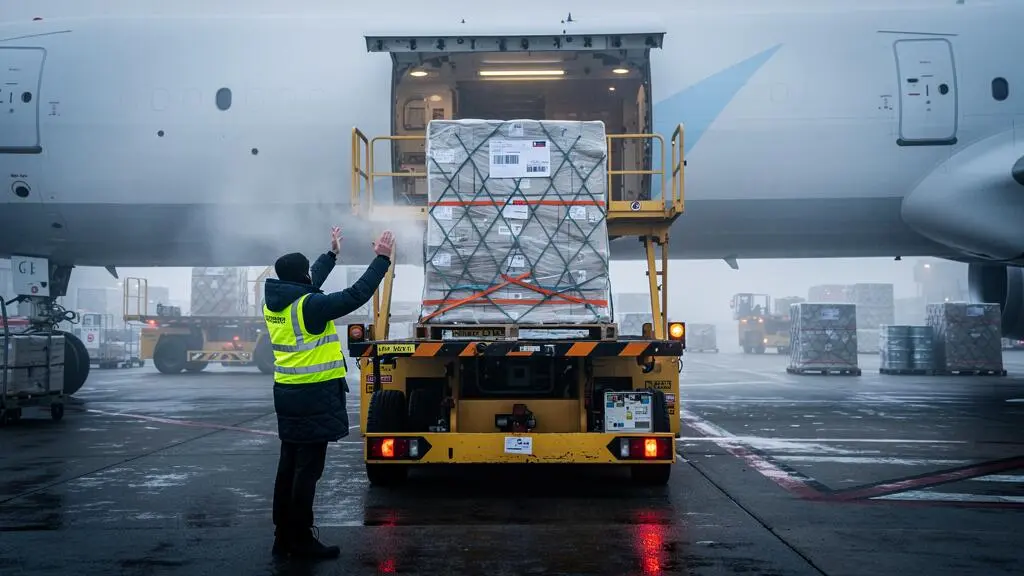
Shipment urgency should change a UK-Canada logistics plan by changing the balance between transport cost, delivery reliability, inventory availability and the consequences of delay. Paying for faster freight is not automatically the right response. The appropriate decision depends on how much time remains, what happens if the deadline is missed, whether the goods can legally enter Canada or the UK, and which transport options are still operationally available.
For businesses managing international deliveries, the most effective approach is to establish a normal replenishment route and a separate response for genuine exceptions. Sea freight may remain suitable for planned volumes, while air freight can cover immediate demand. Between those options, businesses must also account for customs preparation, destination handling and inland delivery rather than comparing flight or sailing times alone.
Urgency should therefore be treated as a measurable supply-chain risk. A shipment that is commercially important but flexible may not justify an expensive upgrade. A delayed component that stops production may justify it. The objective is to protect the delivery commitment without allowing emergency freight to become the default operating model.
Shipment urgency: the essential decisions
- Compare the additional cost of faster freight with the measurable commercial consequences of missing the delivery deadline.
- Choose between express air, standard air, sea freight or a partial shipment according to the actual delivery requirement and cargo characteristics.
- Protect the schedule by preparing customs documentation, importer responsibilities and destination arrangements before booking.
- Why Does Shipment Urgency Increase More Than Just the Freight Rate?
- How Can Businesses Decide Whether Paying for Faster Freight Is Justified?
- Express Air, Standard Air or Sea Freight: Which Speed Fits Your Shipment?
- The Compliance Mistakes That Happen When a Shipment Becomes Urgent
- When Is It Too Late to Change Transport Mode for an Urgent Shipment?
- How Can Businesses Compare Air and Sea Freight Costs Accurately?
- Freight Budget Cuts That Can Create More Expensive Supply-Chain Problems
- Air or Sea Freight: Which Option Works Best for UK-Canada Shipments?
Why Does Shipment Urgency Increase More Than Just the Freight Rate?
Shipment urgency increases logistics costs because the freight quotation is only one part of the delivery operation. A time-sensitive UK-Canada shipment may also require additional handling, revised collection arrangements, faster destination processing and more intensive coordination. The commercial impact can extend to inventory, customs administration and the consequences of a missed delivery commitment.
Priority handling and capacity are important considerations when requesting a faster service. Depending on the carrier, route and booking conditions, an urgent movement may involve different service charges or availability constraints. Businesses should request an itemised quotation rather than assume that the advertised transport rate covers every priority-related expense. Weekend handling, special cargo requirements and changes to collection or delivery arrangements should be checked separately.
Inventory creates another cost that is easy to overlook. If a Canadian operation repeatedly relies on urgent shipments from the UK, it may need to reconsider its replenishment model. Holding additional safety stock in Canada could reduce the frequency of emergency movements, although that decision introduces storage costs, capital requirements and the risk of unsold inventory. The same reasoning applies to Canadian suppliers serving customers in the UK.
Customs preparation also matters. Missing documents, licences or export information can prevent goods from progressing through the border process. An upgraded transport service does not automatically resolve these problems. For UK exports, UK government guidance on export customs clearance explains the importance of having the required export arrangements and documents in place.
Finally, recurring urgency can weaken the economics of an otherwise efficient freight operation. If every replenishment requires an exceptional service, businesses may be paying repeatedly to compensate for inadequate forecasting, insufficient buffers or poorly coordinated purchasing.
The key distinction is between the cost of moving one shipment faster and the cost of maintaining a supply chain that regularly needs emergency intervention. The second problem requires a planning solution, not simply a more expensive carrier service.
How Can Businesses Decide Whether Paying for Faster Freight Is Justified?
Paying for faster freight is justified when the additional delivery cost is lower than the expected commercial loss associated with a slower arrival. Businesses should compare the cost of upgrading the shipment with the consequences of missing the required date, including lost sales, contractual penalties, customer disruption or production stoppages. The decision should be based on the value protected, not simply the pressure to deliver quickly.
A useful starting point is to establish the difference between the standard and upgraded freight quotations. The comparison should include additional handling, destination charges and any other costs created by the change. The resulting premium can then be compared with the estimated financial impact of a late delivery.
For example, consider a UK manufacturer sending a replacement component to a Canadian customer. If the component is needed to restore a production line, the cost of waiting may be significantly higher than the additional freight expense. By contrast, if the shipment contains replenishment stock for a customer with sufficient inventory, a faster service may provide little measurable benefit.
The calculation should also distinguish between an unavoidable emergency and an internal planning failure. A sudden supplier disruption or unexpected equipment breakdown may justify exceptional freight. Repeated urgent orders caused by inaccurate forecasting suggest that the underlying process needs attention.
One alternative is partial air freight. Instead of upgrading the entire shipment, a business can assess whether a smaller quantity would cover immediate demand while the remaining goods continue by sea. This approach reduces the amount of cargo exposed to premium transport costs, provided that the partial quantity genuinely resolves the immediate requirement.
The partial-shipment approach is particularly useful when the customer needs a limited quantity to maintain operations but the full order does not have to arrive immediately. Its feasibility depends on whether the goods can be separated, whether the documentation can cover the different movements and whether the receiving operation can handle separate deliveries.
Once the financial consequences are clear, the next decision is which transport service can meet the deadline reliably. The fastest advertised option is not necessarily the most appropriate one for the cargo or delivery requirement.
Express Air, Standard Air or Sea Freight: Which Speed Fits Your Shipment?
Express air is generally the option to investigate when a shipment has a genuinely short delivery deadline and requires priority handling. Standard air can suit goods that need faster movement than sea freight without necessarily requiring the highest service level. Sea freight remains relevant for planned, heavier or larger consignments when the available delivery window can accommodate the longer transport process. The right choice depends on the complete journey, not the flight or sailing time alone.
For UK-Canada shipments, businesses should distinguish between the main transport movement and the door-to-door service. Collection, warehouse acceptance, export clearance, airport or port handling, arrival procedures, import clearance and final delivery all contribute to the actual schedule.
Express air and standard air may use similar aircraft infrastructure, but the services offered can differ in booking priority, handling arrangements, customs support and delivery commitments. These details depend on the provider and service conditions. A quotation should therefore specify what the service includes and whether its delivery estimate is a commitment or an indicative transit time.
Cargo dimensions also influence the decision. Air freight pricing can depend on chargeable weight rather than physical weight alone. A light but bulky consignment may therefore cost considerably more than its scale weight suggests. Heavy or palletised goods may also face operational restrictions, making the apparent speed advantage less straightforward.
Sea freight is not a single uniform service either. Available services, port combinations, consolidation arrangements and inland movements can affect the overall schedule. Businesses with a flexible deadline should compare the actual options available for their origin, destination and cargo before rejecting ocean transport.
The following comparison provides a practical starting point:
| Criterion | Express air | Standard air | Sea freight |
|---|---|---|---|
| Delivery requirement | Very short deadline | Faster than ocean, with some flexibility | Planned delivery window |
| Typical cargo suitability | Small, urgent consignments | Time-sensitive commercial cargo | Large or heavier planned volumes |
| Cost consideration | Priority service premium | Air freight and chargeable weight | Freight plus inventory and transit costs |
| Main planning concern | Service availability and final delivery | Handling and overall transit schedule | Longer replenishment cycle and stock exposure |
A fixed contractual deadline requires a different assessment from a rolling replenishment requirement. A one-off customer promise may justify a premium service, whereas predictable recurring demand can usually be planned around a regular freight schedule and an appropriate inventory buffer.
Before booking, businesses should obtain a door-to-door schedule and confirm the assumptions behind it. The next consideration is whether customs and regulatory requirements can be met within that same schedule.
The Compliance Mistakes That Happen When a Shipment Becomes Urgent
Urgent freight must meet the same applicable customs and product-regulatory requirements as a normally scheduled shipment. A shorter transport deadline does not remove the need for accurate declarations, appropriate registrations, licences or certificates. In fact, compressed preparation time makes it especially important to verify the documentation before cargo is handed to the carrier.
For UK exports, businesses should establish that the relevant customs arrangements are ready before dispatch. Depending on the shipment and the UK location, this can include an appropriate EORI number, an export declaration, an invoice and any required licences or certificates. Missing permissions or unsuccessful inspections can result in goods being held at the border.
For commercial imports into Canada, the importer of record has important responsibilities beyond the physical arrival of the goods. The Canada Border Services Agency‘s Memorandum D17-2-5, effective from 1 January 2026, explains the importer’s responsibility for customs verifications and post-accounting obligations, including record keeping, corrections and payment of duties. Its identification framework includes a Business Number incorporating a nine-digit Canada Revenue Agency business number and a six-character CBSA import/export account number.
This responsibility should be established before the shipment becomes urgent. Businesses should also brief their customs broker and confirm the information required for the relevant import declaration. A broker can assist with customs processes, but the importer should not assume that using one automatically transfers the importer’s legal responsibilities.
1 January 2026
Effective date stated in CBSA Memorandum D17-2-5 on importer-of-record duty liability. The memorandum addresses customs responsibilities rather than providing a complete guide to every Canadian import procedure.
Canada Border Services Agency, CBSA memorandum on importer-of-record liability.
Product-specific requirements deserve separate attention. Food imports into Canada, for example, can require an applicable import licence, preventive controls and traceability records. Certain commodities may also fall under additional legislation, including the Food and Drug Regulations, Health of Animals Regulations and Plant Protection Regulations.
The Canadian Food Inspection Agency‘s CFIA step-by-step guide to importing food into Canada makes clear that importers must identify the requirements applicable to their products. These food-specific requirements should not be generalized to every commercial product category.
Paying for faster transport cannot substitute for regulatory preparation. If the necessary product information, permissions or declarations are incomplete, a shipment may encounter additional administrative work or a border hold regardless of its transport mode.
Five checks before booking urgent international freight
- Confirm the exporter and importer details: record the relevant business identification and customs registration information for both sides of the transaction.
- Validate the customs classification: prepare a documented HS code and product description for the goods being shipped.
- Collect the required documents: assemble the invoice, export declaration information and applicable licences or certificates in one shipment file.
- Verify product-specific requirements: record the relevant regulatory permissions, certificates and importer obligations for the commodity.
- Brief the customs broker and carrier: provide the shipment information and obtain confirmation of the documentation and clearance arrangements before handover.
Businesses should treat compliance preparation as part of the transport schedule, not as an administrative task to complete after the booking. Once the shipment is accepted or loaded, changing the transport arrangement may become significantly more complicated.
When Is It Too Late to Change Transport Mode for an Urgent Shipment?
Changing transport mode becomes increasingly difficult once cargo has entered the carrier’s operational process. A shipment that has been booked but not collected may still offer opportunities for adjustment, subject to the carrier’s terms. Once goods have been accepted, consolidated, loaded or dispatched, switching from sea to air may require recovery, rebooking and additional handling that undermine the intended time saving.
The important distinction is between a change that is commercially possible and one that can still protect the original delivery deadline. A container that has already been loaded onto a vessel cannot simply be treated as an available air-freight consignment. The cargo may need to be recovered, separated from other goods, transported to another facility and prepared for a different service. The time and cost involved depend on the actual shipment and the parties controlling it.
Businesses should therefore identify the decision points that progressively reduce flexibility:
- Before booking: compare alternative modes and agree the preferred emergency option.
- After booking confirmation: ask the forwarder whether the service can still be amended and what cancellation or change conditions apply.
- After carrier acceptance: establish whether the cargo can be recovered or redirected and obtain a revised schedule.
- After container or aircraft loading: confirm whether any physical intervention is operationally possible and assess the additional consequences.
- After departure: concentrate on the remaining destination-side and delivery options rather than assuming that a mode change is still practical.
Even when the original transport mode cannot be changed, businesses may still have useful options. These can include preparing import documents earlier, coordinating with the destination customs broker, arranging suitable inland transport or checking whether priority handling is available at the arrival terminal.
There is also a contractual dimension. A change after loading may affect the original booking arrangements, transport documentation, the bill of lading, agreed Incoterms and insurance conditions. The parties should establish who has authority to request the change, who bears the additional costs and whether the existing insurance arrangements remain appropriate.
For many late-stage shipments, improving the remaining clearance and delivery process is more realistic than trying to reverse the original transport decision. That makes accurate cost and schedule comparisons particularly important before the next shipment is booked.
How Can Businesses Compare Air and Sea Freight Costs Accurately?
Businesses can compare air and sea freight accurately by calculating the total landed cost of each option for the same shipment, origin, destination and delivery requirement. Comparing only the quoted transport rate creates an incomplete picture because handling, documentation, customs brokerage, inland transport and inventory costs can differ significantly between modes.
A useful comparison begins with an itemised cost structure. Each freight forwarder should provide enough detail to distinguish the transport charge from additional services and surcharges. Where a quotation combines several charges into one figure, businesses should request clarification before using it in a purchasing decision.
The comparison should include:
- Base freight charge and applicable fuel or security surcharges.
- Origin collection, handling and documentation fees.
- Airport or port terminal charges at destination.
- Customs brokerage and any relevant administrative costs.
- Applicable customs duties and VAT treatment, assessed separately from the freight provider’s charges.
- Final inland transport and delivery arrangements.
- Inventory holding costs and the financial impact of goods remaining in transit.
Chargeable weight is particularly important for air freight. Depending on the carrier’s pricing rules, the amount billed may be based on actual weight or volumetric weight. Businesses should provide accurate dimensions and weight measurements, then confirm which calculation applies to the specific quotation. This prevents a light but bulky consignment from appearing artificially inexpensive in an initial comparison.
Sea freight generally needs a different cost perspective. A lower freight charge per unit may be offset by longer time in transit, greater inventory exposure and the possibility that demand changes before the goods arrive. These are commercial considerations that should be reflected in the comparison rather than treated as unrelated operating expenses.
A reusable comparison spreadsheet can contain one column for each transport option and one row for each cost component. It should also include a separate assumptions section covering shipment dimensions, currency, exchange-rate assumptions, quotation validity, fuel surcharges and delivery requirements.
| Cost or assumption | Air freight | Sea freight |
|---|---|---|
| Base transport | Quoted air charge | Quoted ocean charge |
| Additional surcharges | Applicable air charges | Applicable ocean charges |
| Origin and destination handling | Itemised charges | Itemised charges |
| Customs and administration | Relevant costs | Relevant costs |
| Inland transport | Collection and final delivery | Collection and final delivery |
| Inventory exposure | Capital tied up during transit | Capital tied up during transit |
| Schedule assumptions | Complete delivery estimate | Complete delivery estimate |
The spreadsheet should calculate a separate total for each mode and make clear which charges are confirmed, estimated or excluded. Currency movements and changes to fuel surcharges can then be tested through alternative assumptions rather than silently absorbed into the quoted price.
Once the cost structure is visible, businesses can identify which savings are genuine and which simply transfer financial risk elsewhere in the supply chain. That distinction becomes especially important when freight budgets are under pressure.
Freight Budget Cuts That Can Create More Expensive Supply-Chain Problems
Freight budget cuts become counterproductive when they reduce the reliability or flexibility needed to protect customer commitments. Choosing slower services, reducing safety stock or consolidating shipments less frequently may lower immediate expenditure, but the savings should be assessed against the additional risk of stockouts and emergency transport. The cheapest service is not necessarily the least expensive supply-chain option.
One common risk is removing inventory buffers without adjusting replenishment schedules. If a Canadian warehouse depends on UK suppliers, a reduction in safety stock leaves less time to respond to unexpected demand or supplier disruption. When a shortage occurs, the business may have to pay for an urgent air shipment that costs more than the inventory policy it replaced.
Another potential problem is selecting a service without sufficient tracking or delivery visibility. A lower-cost option may be appropriate for stable, non-critical goods, but it can create uncertainty when customers depend on a specific arrival date. Businesses should evaluate the information and service commitments included in each quotation rather than treating all economy services as equivalent.
Insurance is another area requiring care. Removing or reducing cargo cover can lower an immediate expense, but it also changes the financial exposure if goods are lost or damaged. Businesses should review the actual risks, policy exclusions, coverage limits and existing contractual arrangements before making that decision.
Instead of applying the same reduction across every shipment, freight expenditure should be separated into fixed contractual costs, variable surcharges and avoidable operational inefficiencies. This can reveal more targeted opportunities, such as reviewing packaging dimensions, negotiating specific additional charges or improving shipment consolidation.
Demand predictability should guide the level of service protection. Stable product categories with flexible customers may tolerate slower freight and lower stock buffers. New products, seasonal demand and contractual deliveries may require more protection because the consequences of a delay can be less predictable or more significant.
A useful way to manage this is to monitor the relationship between budget reductions and subsequent emergency movements. If a reduction in planned freight expenditure repeatedly leads to expensive urgent bookings, the apparent saving may be shifting costs rather than eliminating them.
Effective cost control does not mean paying for maximum speed on every shipment or choosing the slowest option everywhere. It means preserving the service level required by the commercial importance and predictability of each delivery.
Key decisions before choosing air or sea freight
- Use air freight when the financial consequences of waiting justify its additional cost and the service can meet the actual deadline.
- Use sea freight when demand can be planned around the available transit window and inventory exposure remains commercially acceptable.
- Consider a hybrid replenishment model that combines planned ocean movements with limited air-freight exceptions.
Air or Sea Freight: Which Option Works Best for UK-Canada Shipments?
Neither air freight nor sea freight is universally best for UK-Canada shipments. Air is generally more appropriate for urgent, relatively light or high-value cargo when the cost of delay is significant. Sea is often more suitable for heavier or larger planned volumes when the business can accommodate the longer transport schedule. The correct choice depends on delivery urgency, cargo characteristics, demand predictability and the financial consequences of waiting.
For a business managing regular international deliveries, the decision should form part of its wider inventory and purchasing strategy. Air freight can protect immediate demand, while sea freight can support planned replenishment. The two modes can therefore complement each other rather than compete as mutually exclusive choices.
A hybrid freight model is one practical way to balance cost and responsiveness. Under this approach, the business moves its expected baseline demand by sea and reserves air freight for exceptions. The exception criteria should be established before a problem occurs, so purchasing and logistics teams know when an upgrade is justified.
For example, a UK supplier serving Canadian customers could use regular ocean shipments for forecast demand and assess a smaller air shipment when an unexpected order threatens to exceed available stock. The business would still need to confirm that the partial quantity, customs documentation and destination arrangements can support the required delivery date.
The model also needs periodic review. Changes in demand, product value, supplier reliability, shipment dimensions and carrier availability can alter the balance between the two modes. A service that was appropriate for one product category may not suit another.
The most important operational principle is to separate predictable demand from genuine exceptions. A business that repeatedly needs emergency freight should examine its forecasting, procurement lead times, inventory levels and supplier coordination rather than simply increasing its air-freight budget.
Before finalising a UK-Canada logistics plan, decision-makers can use the following framework:
| Shipment situation | Preferred option to assess | Main decision condition |
|---|---|---|
| Unexpected critical shortage | Express or standard air | Value of avoiding the immediate disruption |
| Small urgent replenishment | Partial air shipment | Whether a limited quantity solves the shortage |
| Regular forecasted demand | Sea freight | Whether the delivery window accommodates the schedule |
| Large planned commercial order | Sea freight or a hybrid arrangement | Total landed cost and inventory requirements |
| Demand with frequent fluctuations | Hybrid air-and-sea model | Whether the business can define clear upgrade triggers |
For the next shipment, logistics and purchasing teams should agree on the required delivery date, the financial threshold for upgrading transport, the customs responsibilities and the contingency quantity that could move separately. This creates a practical UK-Canada logistics plan in which urgency has a defined response rather than becoming a recurring and expensive operating habit.
Is air freight always faster than sea freight between the UK and Canada?
Air freight generally offers a faster main transport movement, but the complete delivery time also depends on collection, export clearance, handling, import procedures and final delivery. Businesses should compare door-to-door schedules rather than flight and sailing times alone. The actual service and route must be confirmed with the freight provider.
Can a UK-Canada shipment be split between air and sea freight?
Yes, businesses can consider sending an urgent portion by air while the remaining quantity moves by sea. This approach can reduce the cost of upgrading an entire shipment. Its feasibility depends on cargo separation, documentation, carrier arrangements and whether the smaller quantity is sufficient to meet immediate demand.
Does paying for express freight guarantee faster customs clearance?
No. A faster transport service does not automatically accelerate customs inspections or remove regulatory requirements. UK export declarations, applicable licences and Canadian import obligations must still be satisfied. Businesses should prepare the required documents and coordinate with their customs broker before dispatch.
Who is responsible for customs compliance when importing goods into Canada?
The importer of record has direct responsibilities under the CBSA framework, including customs verifications, record keeping, declaration corrections and payment of duties. A customs broker may assist with the process, but businesses should not assume that appointing a broker automatically transfers the importer’s responsibilities.
How can a business reduce urgent freight costs without increasing delivery risk?
Start by identifying why urgent shipments occur. Improve demand forecasting, review safety stock, establish regular replenishment schedules and compare the total landed cost of different transport options. A hybrid model combining planned sea freight with limited air-freight exceptions can also help protect immediate demand without upgrading every shipment.