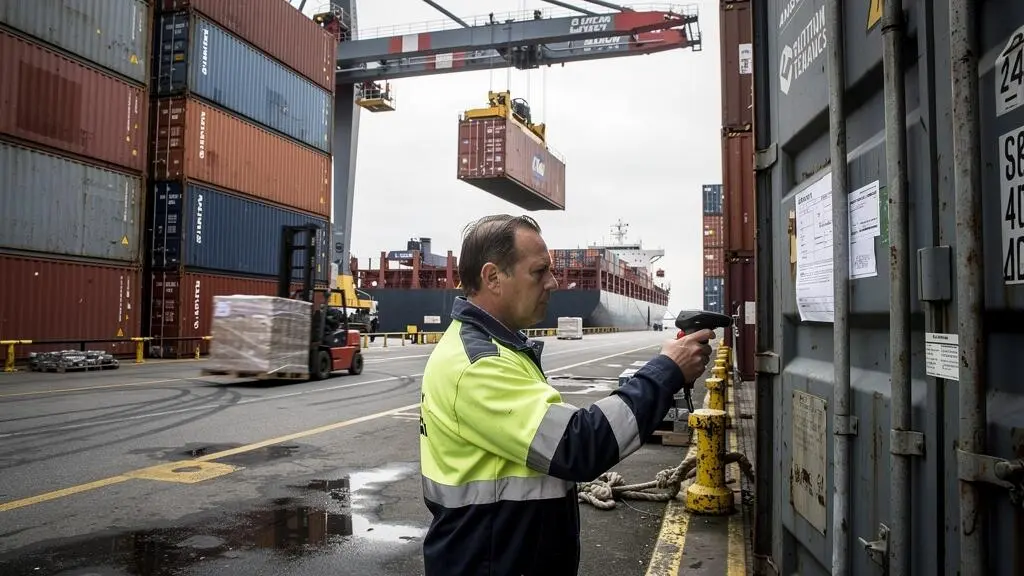
A product purchased for £10,000 in the United Kingdom does not necessarily cost a Canadian importer £10,000 converted into Canadian dollars. Customs duties, freight, insurance, clearance charges and import taxes can change the final amount considerably. The same principle applies to Canadian goods entering the UK.
Tariffs affect UK-Canada trade by increasing the cost of bringing goods into the destination market, unless a zero or preferential rate applies. The actual financial impact depends on the product’s customs classification, origin, customs value and any additional trade measures. A published duty percentage therefore tells only part of the story.
The UK-Canada Trade Continuity Agreement (TCA) provides preferential treatment for eligible goods. Since 1 September 2026, UK traders can also use the Comprehensive and Progressive Agreement for Trans-Pacific Partnership (CPTPP) for trade with Canada. Neither framework eliminates the need to check product-specific requirements.
For importers and exporters, an accurate landed-cost calculation can determine whether a supplier is competitive, a sales price protects its margin and a shipment remains profitable after customs clearance.
UK-Canada tariffs: the essential cost considerations
- The published tariff rate normally applies to the legally determined customs value, which may differ from the supplier’s invoice amount.
- Preferential duty is conditional on the product meeting the relevant origin rules and the importer holding appropriate supporting evidence.
- A reliable landed-cost estimate combines duties, transport, insurance, import taxes and clearance charges before the purchase is committed.
- Why Can the Tariff Paid on Imported Goods Differ From the Published Rate?
- How Can Importers Estimate Tariffs Before Goods Leave the Supplier?
- Zero, Preferential or Standard Tariff: Which Rate Applies to Your Product?
- The Tariff Mistakes That Can Turn a Profitable Shipment Into an Expensive One
- When Should Tariff Costs Be Calculated Before a UK-Canada Purchase?
- How Can Importers Determine the Correct Tariff Rate Step by Step?
- HS Code Errors That Can Trigger Extra Duties, Delays or Customs Questions
- How Can Businesses Identify the Applicable Tariff Before Importing Goods?
Why Can the Tariff Paid on Imported Goods Differ From the Published Rate?
The tariff paid on imported goods can differ from the amount expected because the published percentage is applied to a legally determined customs value, not necessarily the supplier’s invoice total. Freight adjustments, currency conversion, origin eligibility and additional trade measures can all change the duty assessed at the border.
Consider a hypothetical UK import with an invoice price of £10,000 and an illustrative duty rate of 6%. A buyer might budget £600 in customs duty. However, suppose £1,000 of freight and insurance must be added under the applicable UK valuation rules. The customs value becomes £11,000, producing duty of £660.
The legal tariff rate remains 6%, but the duty now represents 6.6% of the original £10,000 invoice price. The higher effective percentage results from the difference between the invoice value and the customs valuation base.
This example is not a universal valuation rule. The treatment of freight and insurance differs between the UK and Canada and depends on the transaction, transport arrangements and applicable legislation.
For UK imports, HMRC requires the transaction value method to be considered first. This normally starts with the price paid or payable for goods sold for export, subject to statutory adjustments. Where the method cannot be used, alternative valuation methods must be considered. The HMRC guidance on calculating the customs value of imported goods explains this framework.
Canadian importers must establish the value for duty under Canada’s rules and declare it in Canadian dollars. The Canada Border Services Agency (CBSA) applies its recognised exchange rate for the relevant customs valuation date, which may differ from the exchange rate used when the supplier was paid.
UK importers must likewise use the customs exchange rate required by HMRC. Exchange-rate timing and applicable rounding conventions can therefore produce differences between internal estimates and customs declarations.
Additional trade measures create another source of variation. Anti-dumping duties, countervailing duties or surtaxes may apply to specified products, countries or producers alongside ordinary customs duty. They are not necessarily reflected in a simple headline rate.
Finally, a preferential tariff displayed for a product is not automatically available. A shipment that fails the relevant rules of origin, or lacks the evidence required for the claim, may instead attract the applicable non-preferential rate.
Consequently, buyers should assess the tariff rate and its calculation base separately before comparing prices. The next task is to turn those rules into a usable shipment estimate.
How Can Importers Estimate Tariffs Before Goods Leave the Supplier?
Importers can estimate tariffs before dispatch by identifying the product’s customs classification, checking its origin and preferential eligibility, establishing the customs value and applying the relevant duty rate. They should then add freight, insurance, import taxes and clearance costs to calculate a landed-cost estimate that can be compared against the intended selling price.
The process begins with a technically accurate description of the goods. Material composition, intended function, processing stage and packaging may all affect classification. The HS code provided by a supplier is a useful starting point, but it should not be accepted without verification.
Next, identify the destination country’s tariff treatment. For UK-Canada shipments, compare the standard tariff with any available preference under the TCA or CPTPP, taking account of the distinct origin conditions and documentation requirements.
For imports into Canada, consult the CBSA Customs Tariff 2026. Its T2026-2 version took effect on 1 September 2026. For imports into the UK, use the UK Integrated Online Tariff and the tariff information effective for the expected import date.
Both jurisdictions should be reviewed when planning repeated bilateral trade, particularly because exports and imports are separate customs transactions with different classification detail, valuation rules and tax treatment.
The following hypothetical example illustrates the structure of a landed-cost calculation for goods imported into Great Britain. All figures, including the 5% duty rate and 20% import VAT assumption, are illustrative rather than verified product-specific rates.
Worked example: hypothetical Canadian shipment to Great Britain
A UK business purchases goods from a Canadian supplier for £20,000. Assume £2,000 in transport and insurance costs are includable in customs value, no preferential treatment is claimed, and an illustrative 5% ad valorem duty applies.
| Cost component | Calculation | Amount |
|---|---|---|
| Goods purchase | Supplier invoice | £20,000 |
| Transport and insurance | Assumed dutiable additions | £2,000 |
| Customs value | £20,000 + £2,000 | £22,000 |
| Customs duty | 5% × £22,000 | £1,100 |
| Import VAT | 20% × £23,100 | £4,620 |
| Customs clearance fee | Assumed service charge | £150 |
| Total including import VAT | Sum of listed components | £27,870 |
| Cost excluding recoverable VAT | Assuming full VAT recovery | £23,250 |
The VAT calculation assumes that no other costs must be included in its taxable base and that the goods are subject to the standard UK VAT rate. Actual valuation, VAT treatment and recovery entitlement must be verified for the shipment.
In this scenario, the difference between the VAT-inclusive cash requirement and the VAT-exclusive cost is 4,620 £. That distinction matters because recoverable import VAT may affect working capital without becoming a permanent product cost. Businesses unable to recover it must treat the amount differently.
For Canadian imports, the equivalent model should use Canadian dollars, the applicable Canadian duty rate, GST or other relevant import taxes, and the Canadian valuation rules. Do not transfer the UK calculation base automatically.
Once the full calculation is available, importers can compare the actual economic benefit of different suppliers and tariff treatments rather than relying on their quoted unit prices.
Zero, Preferential or Standard Tariff: Which Rate Applies to Your Product?
The applicable tariff depends first on the product’s correct classification, then on its origin and the availability of preferential treatment. Goods may attract zero duty under the standard tariff, qualify for a reduced rate through a trade agreement or face the standard duty when preference conditions are not satisfied. Additional measures may still apply.
For UK-Canada trade, the Trade Continuity Agreement entered into force on 1 April 2021. Its preferential rates are established through the agreement’s tariff schedules, but qualification depends on the relevant product-specific rules of origin.
Since 1 September 2026, the CPTPP provides another potential route to preferential treatment for UK-Canada trade. Eligibility and the most advantageous treatment must be checked against the rules of the specific agreement rather than assumed to be interchangeable.
The UK government guidance on trade with Canada also notes that, in certain cases, the UK’s applied non-preferential tariff may be lower than the preferential rate specified in the TCA.
That makes a comparison of the available rates essential, even where goods clearly qualify as originating.
| Tariff treatment | When it may apply | What to verify |
|---|---|---|
| Zero standard tariff | The destination tariff schedule sets ordinary customs duty at zero | Exact classification and other applicable measures |
| Preferential tariff | Goods qualify under an applicable trade agreement | Origin rules, evidence, tariff schedule and claim requirements |
| Standard non-preferential tariff | No preference is available or successfully claimed | Current destination tariff and product classification |
| Additional trade measures | Specified goods or origins fall within a relevant measure | Scope, effective date and any additional liability |
Many qualifying industrial products may attract zero preferential duty, but the treatment is not uniform across every commodity. Agricultural products, food and processed goods can involve remaining duties, tariff-rate quotas or special market-access conditions.
Rules of origin require more than proof that goods were dispatched from Canada or the UK. A product might be manufactured in a third country, stored in Britain and subsequently exported to Canada without becoming UK-originating.
Under the TCA, products generally need to be wholly obtained or sufficiently processed in accordance with their applicable product-specific rules. For UK exports to Canada, the exporter must provide the required origin declaration to support a preference claim.
Third-country transit does not automatically change origin. However, the conditions of transit, customs supervision and any processing undertaken must be checked against the relevant agreement. Substantial processing may change the origin analysis, but the precise result depends on the applicable rule.
Importers should also distinguish between origin used for general customs purposes and preferential origin under a particular agreement. They are not always established using identical criteria.
When classification and origin are documented before dispatch, tariff savings become a calculable commercial advantage instead of an uncertain expectation.
The Tariff Mistakes That Can Turn a Profitable Shipment Into an Expensive One
Tariff mistakes can erase a shipment’s profit through additional duty, penalties, storage charges and delayed delivery. Common causes include incorrect HS classification, undervaluation, missing origin evidence and overlooked trade measures. The financial exposure can extend beyond the original shipment when the same error has been repeated across multiple imports.
Suppose a business imports the same product each month using an incorrect code that produces a lower duty assessment. If customs later determines that another classification applies, the importer may face reassessments across earlier declarations, within the relevant statutory limits.
The opposite problem is also possible. An unnecessarily high tariff classification can lead to repeated overpayments that weaken margins until the importer identifies the error and pursues any available correction or repayment procedure.
Copying a supplier’s HS code without checking it is particularly risky. The first six digits of HS classification are internationally harmonised, but countries use additional digits and may apply different national tariff subdivisions.
Valuation errors present another exposure. An invoice amount may require additions or permitted deductions, depending on the governing rules. Deliberate undervaluation and accidental omission are not necessarily treated alike, but both can lead to reassessment.
Origin documentation creates a separate risk. An importer may budget for a preferential rate, only to discover at clearance that the exporter cannot substantiate the claim. The importer may then need to use the standard tariff treatment.
Post-import preference claims or adjustments may be possible under applicable procedures and time limits. They should not be treated as guaranteed, however, because documentation, eligibility and filing conditions still need to be satisfied.
Less visible costs can become substantial when customs queries interrupt the supply chain. These include storage charges, demurrage, broker handling fees, delivery rescheduling, contractual penalties and the cost of holding replacement stock.
If goods are refused entry or must be re-exported, additional logistics costs may arise. Import duties already paid are not automatically refundable simply because a customer subsequently returns the goods or a sale fails.
The effect on profitability depends on the original margin. In a hypothetical transaction with £1,500 expected gross profit, an unexpected £1,000 duty reassessment and £600 in additional logistics charges would eliminate that profit and create a £100 loss, before any other costs.
A pre-dispatch review is generally less disruptive than correcting a shipment already held at customs. The question is when that review should become part of the purchasing decision.
When Should Tariff Costs Be Calculated Before a UK-Canada Purchase?
Tariff costs should be calculated before a business accepts a supplier quotation, commits to a customer price or signs a purchase agreement that allocates import responsibilities. The earlier the estimate is prepared, the easier it is to compare suppliers, negotiate delivery terms and protect margins against unexpected customs charges.
The first decision point is quotation preparation. An exporter offering a delivered price must understand which customs costs it will bear, while an importer setting a resale price needs to estimate the total acquisition cost before promising a margin.
The second is supplier comparison. A supplier offering a lower factory price may be less competitive when the product attracts a higher tariff, requires expensive customs administration or cannot qualify for preferential origin treatment.
The third is negotiation of Incoterms. Delivery terms determine how transport responsibilities, risks and certain costs are allocated, but they do not override customs legislation or automatically determine who must legally act as importer.
For example, under DDP, the seller generally assumes responsibility for import clearance and applicable duties under the contractual term. Under FOB, used for sea and inland waterway transport, the buyer generally arranges and pays for the main carriage and destination import clearance.
Both parties should nevertheless verify who can act as importer of record and whether the proposed contractual arrangement is workable under the destination country’s rules.
| Commercial situation | Recommended approach | Reason |
|---|---|---|
| One-off low-value purchase | Official tariff lookup and simple cost estimate | Limit analysis costs while checking exposure |
| Recurring imports of identical products | Maintain a reusable classification and landed-cost model | Reduce repeated work and inconsistent treatment |
| High-value purchase or narrow margin | Detailed review before contractual commitment | Small percentage errors can have material consequences |
| Complex goods or uncertain origin | Specialist assessment and, where appropriate, an advance ruling | Improve certainty before shipping |
The threshold for specialist analysis depends on the amount at risk, product complexity, frequency of transactions and potential disruption. There is no universal shipment value below which classification or compliance can be ignored.
Timing also matters because tariff schedules, trade remedies and surtaxes can change between ordering and customs entry. A long-lead-time purchase should therefore include a second rate check closer to importation.
Once tariff exposure is built into quotations and purchasing controls, the remaining challenge is making sure that the underlying tariff classification is technically correct.
How Can Importers Determine the Correct Tariff Rate Step by Step?
Importers determine the correct tariff rate by describing the product accurately, identifying candidate HS classifications, applying the legal classification rules and checking the destination country’s tariff schedule. They must then confirm origin, preferential eligibility and additional measures. Where classification remains uncertain, an advance or binding decision may provide greater certainty before shipment.
The first requirement is a complete product description. Commercial names are rarely enough because customs classification depends on the wording of tariff headings, relevant section and chapter notes, and the rules governing classification.
Useful specifications include materials, composition percentages where relevant, primary function, manufacturing stage, packaging and whether the goods arrive assembled, incomplete or as separate components.
For imports into Great Britain, the UK Integrated Online Tariff is the relevant official starting point. For Canada, the Canadian Customs Tariff provides the tariff headings, national subdivisions and associated rate treatments.
Importers should apply the General Rules for the Interpretation of the Harmonized System, together with the legally relevant notes. Explanatory notes can help resolve ambiguity, but they must be used with proper regard to their legal status.
A hypothetical example illustrates why presentation at import matters. A complete bicycle, an unassembled bicycle presented as a complete article and a separately imported replacement bicycle component do not necessarily require the same classification analysis. The General Interpretative Rules, the completeness of the article and the relevant tariff wording determine the result.
Packaging and sets can also affect classification. Importers should not assume that separately invoiced components are always classified separately, or that combining goods in one retail package necessarily creates a single tariff classification.
Once a likely classification is established, the importer should check the applicable rate and whether origin rules under the selected agreement impose further conditions. A code alone cannot establish preferential entitlement.
Five checks to complete before assigning a tariff rate
- Prepare a technical product specification: retain a dated description covering materials, function, composition and condition at import.
- Identify and assess candidate codes: create a classification worksheet showing the headings considered and the relevant legal notes.
- Record the classification rationale: save the selected code, reasoning and version of the official tariff consulted.
- Validate origin and available rates: produce a comparison showing the standard tariff, eligible preferences and supporting origin evidence.
- Approve the pre-shipment duty estimate: retain a dated calculation showing customs value, exchange-rate assumptions, applicable measures and the expected amount payable.
Where classification remains unclear, importers can consider a formal ruling. HMRC offers advance tariff rulings for qualifying UK import or export circumstances, while the CBSA provides advance classification rulings under Canadian procedures.
Such decisions are subject to their stated scope, applicant conditions and continuing validity. They do not automatically settle every separate issue involving origin, valuation or additional duties.
Documentation also makes later corrections easier: a business can trace precisely which information supported the original classification and identify when product specifications or legal requirements changed.
HS Code Errors That Can Trigger Extra Duties, Delays or Customs Questions
HS code errors can trigger additional customs duties, clearance delays and requests for supporting information. They can also affect preferential origin claims, licensing requirements and import tax treatment. The consequences depend on the legal error, its financial impact, the importer’s conduct and the correction or enforcement procedures available in the destination country.
Not every classification error is treated identically. An importer may make a reasonable mistake despite reviewing the relevant rules, fail to exercise appropriate care or deliberately declare a false classification.
The distinction matters because administrative corrections, penalties and potential enforcement outcomes depend on the relevant legal provisions and circumstances. A classification disagreement is not automatically evidence of fraud.
Errors frequently begin with the supplier’s tariff code. Although the international HS system harmonises the first six digits, UK and Canadian tariff codes can extend that structure differently. The importer must verify the classification required by the importing jurisdiction.
Another common mistake is classifying goods by marketing description. Two products sold under similar names may differ in material, technical function or processing stage and therefore require different classifications.
Sets and kits deserve particular attention. Their correct treatment depends on the applicable classification rules and how the goods are presented. Some combinations may qualify for classification as a set; others may require separate treatment.
The consequences can extend beyond the basic duty percentage. A code may determine whether goods are subject to a particular control, whether a trade remedy applies or which origin rule is relevant under a preferential agreement.
Classification errors can also affect the tax treatment recorded on a customs declaration. A correction should therefore consider the entire entry, rather than adjusting the duty line alone.
When an error is discovered after clearance, the importer should preserve the records, assess affected entries and determine the correction process available with HMRC or the CBSA.
UK procedures may involve amending declarations, making additional payments or pursuing repayment claims, depending on the circumstances. Canadian importers may have statutory correction obligations and, where applicable, options under the CBSA’s voluntary disclosure programme.
Voluntary disclosure is not an automatic exemption from interest, penalties or other liabilities. Eligibility, timing and the completeness of the information supplied can matter. Proactive correction can nevertheless prevent an identified problem from affecting further shipments.
For repeated product lines, the importer should also establish the earliest potentially affected transaction and review whether the same classification was used across multiple customs entries.
Once errors are corrected, the revised classification should be reflected in purchasing records, broker instructions and future landed-cost models so that the problem does not recur.
Key takeaways before your next import
- Confirm the product, not just the supplier’s code: classification must reflect the goods as imported and the destination tariff rules.
- Prove eligibility before claiming savings: a preferential rate has commercial value only when the origin and documentation conditions are satisfied.
- Connect customs compliance to the purchase decision: the duty calculation should inform the landed-cost estimate before the shipment is committed.
How Can Businesses Identify the Applicable Tariff Before Importing Goods?
Businesses can identify the applicable import tariff by combining a verified customs classification with the product’s documented origin, the destination country’s current tariff schedule and a review of any additional trade measures. The resulting duty amount should then be incorporated into a complete landed-cost calculation before the purchase or shipment is finalised.
For UK-Canada trade, this process should begin with a product record that identifies the technical specification, the country of import, the selected tariff code and the commercial transaction to which the goods relate.
The importer must establish whether the product attracts a standard zero rate, a positive standard rate or an available preferential rate under an agreement such as the UK-Canada TCA or CPTPP.
Preferential eligibility should be evidenced through the documentation required by the selected agreement. The declared country of dispatch should not be used as a substitute for an origin assessment.
The next check concerns customs valuation. The importer should establish which costs are includable in the customs value and apply the currency conversion requirements of the destination authority. UK and Canadian valuation rules must be assessed separately.
Trade remedies, surtaxes, quotas and product-specific restrictions should also be checked before treating the tariff calculation as complete.
With the tariff determined, purchasing teams can add transport, insurance, brokerage fees and applicable import taxes to establish the total cash requirement. They should distinguish recoverable tax from permanent acquisition costs when assessing product profitability.
Responsibility for these checks should reflect the complexity and financial exposure of the shipment. Straightforward, well-documented products may be assessed internally using official tariff resources. Complex mixtures, technically ambiguous goods, controlled products and agricultural imports can justify specialist advice.
A customs broker can assist with classification and declarations, but outsourcing preparation does not necessarily remove the importer’s legal responsibilities.
For regular trade flows, the strongest approach is to make tariff identification repeatable. Maintain a controlled product database containing the classification, justification, origin evidence, rate treatment, review date and relevant supplier documents.
Review the record whenever product materials, manufacturing arrangements, sourcing countries or applicable trade measures change. A tariff model is useful only while its assumptions remain valid.
For example, a business importing a qualifying product regularly may establish that preferential duty materially reduces its landed cost. If a manufacturing change causes the product to lose preferential origin, the purchasing price may stay unchanged while its import cost rises. The commercial consequences should be assessed before the revised product is shipped.
Before confirming the next UK-Canada order, complete a dated tariff and origin review, calculate the full landed cost and retain the evidence supporting the result. That single control connects customs compliance with the price the business actually pays at the border.
Does the UK-Canada trade agreement make every shipment duty-free?
No. Preferential treatment depends on the relevant product, tariff schedule and rules of origin. Some products may retain duties or be subject to tariff-rate quotas. Importers should also consider whether treatment under the TCA, CPTPP or the ordinary tariff is applicable and more advantageous.
Is import VAT or Canadian GST the same as a customs tariff?
No. Customs duty and import VAT or GST are distinct charges with different legal bases. A product may attract zero customs duty while still being subject to import tax. Businesses should calculate these amounts separately and assess whether the tax can be recovered.
Can an importer claim preferential duty after the goods have cleared customs?
A post-import preference claim or adjustment may be possible under the procedures of the importing country and the applicable agreement. Eligibility, documentary evidence, time limits and procedural requirements must be checked. Importers should not assume that a missing origin declaration can always be corrected retrospectively.
Does using a customs broker eliminate the importer’s responsibility for HS classification?
No. A customs broker can provide technical assistance and prepare declarations, but the importer’s responsibilities depend on the applicable legislation and representation arrangements. The importer should provide accurate product information, review classifications and retain supporting records.
Can a tariff change after a purchase order has been signed?
Yes. Tariff schedules and trade measures can change between contract signature and importation. The applicable rate depends on the governing rules and relevant customs date. For long-lead-time shipments, businesses should monitor changes and establish contract terms that address unexpected duty costs.