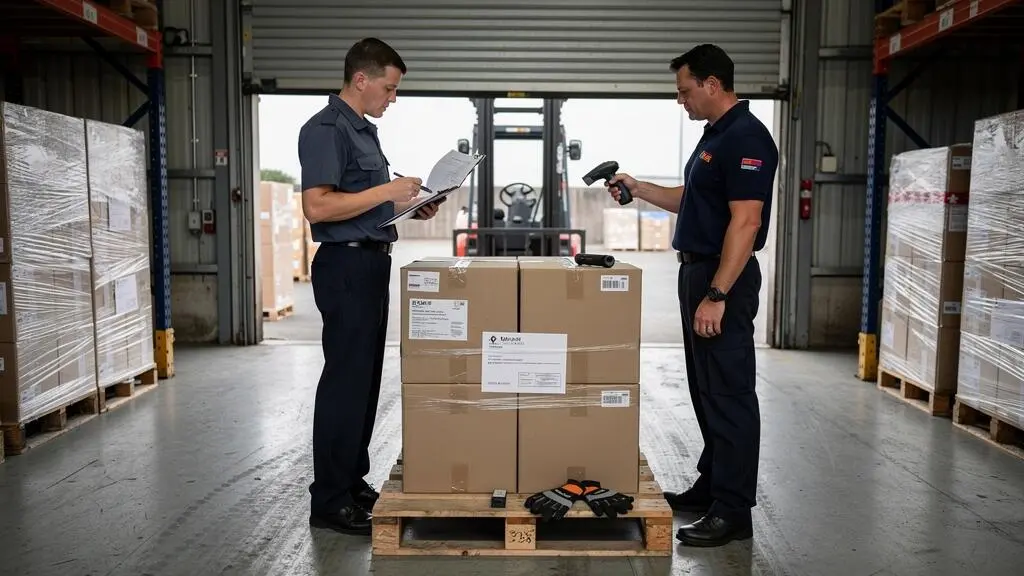
The correct Harmonized System (HS) code determines which customs tariff classification applies to imported goods. It influences the duty rate, eligibility for preferential tariffs, regulatory controls and the information customs authorities need to release a shipment. An incorrect code can therefore cause more than an accounting discrepancy: it may result in additional duty, a request for evidence or an interrupted customs clearance.
For businesses shipping goods between the United Kingdom and Canada, classification requires particular attention. Both countries use the international six-digit HS structure, but their national commodity codes serve different declaration requirements. Canadian importers must also identify the applicable tariff treatment and substantiate any preferential origin claim.
These decisions are connected but legally distinct. A correct classification does not automatically establish UK origin, and an eligible originating product does not automatically receive a preferential rate without a valid claim. A reliable pre-shipment process checks classification, origin, tariff treatment and other import requirements together.
Key points about HS codes and customs clearance
- HS classification determines the tariff heading and national tariff item used to assess customs duties and applicable import measures.
- UK export and Canadian import declarations require different levels of code detail, even when their international six-digit classification matches.
- Preferential duty treatment depends on the applicable trade agreement, qualifying origin and supporting documentation—not the HS code alone.
- Why Can Two Similar Products Have Different HS Codes at Customs?
- How Can Exporters Find the Correct HS Code Without Guessing?
- Which HS Classification Level Should Be Used for a UK-Canada Shipment?
- HS Code Errors That Can Trigger Extra Duties, Delays or Customs Questions
- When Should a Business Recheck an Existing HS Code?
- How Can Importers Determine the Correct Tariff Rate Step by Step?
- Origin Errors That Can Cause Preferential Tariff Claims to Fail
- How Can Businesses Identify the Applicable Tariff Before Importing Goods?
Why Can Two Similar Products Have Different HS Codes at Customs?
Two visually similar products can have different HS codes because customs classification depends on their objective characteristics, not their appearance or commercial description. Materials, technical functions, composition and the wording of relevant tariff headings can place apparently interchangeable goods in different categories, with different duty rates and import requirements.
The Harmonized System provides a structured classification framework. Customs authorities apply the General Rules for the Interpretation of the Harmonized System (GRI), beginning with the legal wording of headings and relevant section or chapter notes. Commercial labels such as “accessory”, “industrial component” or “household product” cannot override that legal framework.
Consider two hypothetical UK-manufactured products exported to Canada:
- Product A: A reusable drinking bottle made primarily from stainless steel, intended for carrying beverages.
- Product B: An externally similar insulated vacuum flask designed to maintain beverage temperature using a vacuum-insulated construction.
Although both products serve a similar consumer purpose, the classification analysis must examine whether the vacuum flask falls within a specific heading for vacuum vessels, while the ordinary bottle is classified according to its construction and material. The final codes depend on the precise specifications and relevant legal notes. Appearance alone cannot settle the question.
A second hypothetical comparison involves an ordinary cotton shirt and a visually similar shirt containing a different textile-fibre composition. Fibre percentages, construction and garment characteristics may affect their classification. The invoice description “shirt” is insufficient for a reliable decision.
The classification process also continues beyond six digits. Canada’s tariff structure uses additional national digits to distinguish tariff items and statistical categories. Two products sharing an international six-digit heading can therefore require different Canadian tariff items where the national subdivisions distinguish their characteristics. A change in the eight-digit tariff item may change the applicable duty rate; a statistical suffix alone does not necessarily do so.
Importers should follow the six GRIs in their legal sequence, rather than selecting whichever code produces the lowest duty. GRI 1 prioritises heading wording and relevant legal notes; other rules address issues such as incomplete goods, mixtures and competing headings, while GRI 6 governs subheading classification.
The supplier’s suggested code or a freight forwarder’s previous classification may help identify a candidate heading, but it does not transfer responsibility for an accurate customs declaration. The importer remains responsible for the accuracy of the information submitted for Canadian customs purposes.
Once the technical characteristics that distinguish a product have been identified, exporters can move from a plausible code to a documented classification decision.
How Can Exporters Find the Correct HS Code Without Guessing?
Exporters can identify the correct HS code by documenting the product’s physical and technical characteristics, searching the official tariff nomenclature, applying the relevant interpretation rules and checking the destination country’s national tariff subdivisions. If competing classifications remain plausible, an official advance ruling provides greater legal certainty than an informal code recommendation.
For UK-to-Canada shipments, the starting point is the UK Trade Tariff commodity code lookup. This government service helps identify commodity codes and provides access to applicable UK tariff information. Exporters should search using the product’s actual materials, construction, function and use—not simply its commercial name.
For each candidate heading, review the relevant section and chapter notes. If several headings appear possible, the General Rules of Interpretation establish the legal sequence for resolving the classification.
After establishing the international six-digit classification, consult the Canadian Customs Tariff for the applicable import date. The 2026 tariff schedule, including its T2026-2 version effective from 1 September 2026, provides the relevant Canadian tariff structure. The T2024 schedule is historical and should not be treated as the current tariff for shipments in November 2026.
The exporter and importer should retain a classification file containing the product description, technical drawings, composition information, intended use, relevant tariff wording and reasons for accepting or rejecting candidate codes. Missing information frequently explains why a supplier, broker and importer arrive at different classifications.
Three shortcuts deserve particular caution:
- Supplier codes: Useful as an initial reference, but may reflect another country’s tariff structure or an outdated specification.
- Competitor shipment data: Can suggest headings to investigate, but rarely establishes that the competing product is technically identical.
- Generic online HS databases: Helpful for preliminary research, but may omit legal notes, current amendments or country-specific subdivisions.
Where uncertainty is material, exporters can consider HMRC‘s Advance Tariff Ruling service for relevant UK classification questions. Canadian importers can seek an advance ruling on tariff classification from the Canada Border Services Agency (CBSA). A ruling must be requested from the competent authority and applies within its stated scope, conditions and jurisdiction. A UK ruling does not automatically bind Canadian customs, and a classification ruling does not independently establish preferential origin.
After the correct heading has been established, the next task is to determine how many digits each customs administration requires.
Which HS Classification Level Should Be Used for a UK-Canada Shipment?
A typical UK-to-Canada shipment requires an eight-digit UK commodity code for the UK export declaration and a ten-digit Canadian classification for the Canadian import declaration. The first six digits provide the international HS foundation, while Canada’s eight-digit tariff item determines the tariff classification used for duty assessment and the final two digits provide statistical detail.
The distinction matters because the HS is internationally harmonised only at the six-digit level. National authorities can establish further subdivisions for tariff and statistical purposes.
| Classification level | Purpose | Practical application |
|---|---|---|
| 6 digits | International HS subheading | Common basis for comparing UK and Canadian classifications |
| 8 digits, UK | UK export commodity code | Typically required for a standard UK export declaration |
| 8 digits, Canada | Canadian tariff item | Identifies the national tariff classification for duty assessment |
| 10 digits, Canada | Canadian classification including statistical suffix | Used to provide the applicable classification detail on Canadian commercial import declarations |
For UK imports, commodity codes generally extend to ten digits, but that should not be confused with the ordinary eight-digit UK export requirement. Specific customs procedures or exceptions may require separate verification.
Similarly, a Canadian commercial invoice may identify goods using their six-digit international HS subheading, while the import declaration requires the appropriate Canadian classification details. An invoice containing only six digits does not automatically invalidate a shipment, but it can create additional work if the importer or customs broker lacks the information needed to establish the complete Canadian code.
Classification precision also affects preferential tariff claims. The UK-Canada Trade Continuity Agreement (TCA) links tariff treatment to the goods concerned and their qualifying origin. If the importer uses the wrong national tariff item, the declared rate may be incorrect even where the goods genuinely originate in the UK. An incomplete code does not, by itself, extinguish preferential origin, but it can obstruct a properly supported claim.
Export and import codes should therefore be reconciled at the international classification level while respecting national differences. Their complete national codes are not expected to be identical. Where they differ within the harmonised six digits, the parties should investigate the reason, including any relevant differences in tariff nomenclature versions or interpretation.
Correct code length is only one part of declaration accuracy; selecting the wrong tariff heading can produce more significant financial and compliance consequences.
HS Code Errors That Can Trigger Extra Duties, Delays or Customs Questions
HS code errors can cause excess duty payments, unpaid customs duties, additional documentation requests, inspections and delays in releasing imported goods. Customs authorities may also reassess previous declarations and impose applicable interest or penalties. The consequences depend on the nature of the error, the amounts involved, the importer’s compliance history and the relevant correction rules.
Misclassification does not always reduce duties. A company can pay too much by choosing a tariff item with a higher rate, or too little by applying a reduced rate to goods that do not qualify for it. Both outcomes require attention because customs declarations must be accurate regardless of whether the error benefits the importer.
Canadian importers may seek refunds or adjustments where the statutory conditions and deadlines are satisfied. The applicable process depends on the nature of the mistake. Overpayments should not be assumed to be recoverable indefinitely.
CBSA verification can involve examining the imported goods, reviewing specifications and comparing declarations against invoices, purchase records and supporting classification evidence. An inconsistency may lead to requests for further information or reassessment.
An honest mistake is not necessarily treated in the same way as a knowingly false declaration. Nevertheless, an error made without adequate checks is not automatically exempt from administrative consequences. The records showing how a classification was selected, reviewed and corrected are important when the importer must demonstrate its compliance practices.
In Canada, post-import changes may require an adjustment or correction under the applicable CBSA process. Importers should determine whether a correction obligation has arisen, identify affected transactions and preserve evidence supporting the amended classification. UK exporters should separately assess whether an error in an export declaration requires amendment or another post-clearance procedure through HMRC.
Common risk patterns include reusing a code from a similar product, importing a supplier’s catalogue classification without verification and applying one code across product variants with materially different compositions. These patterns can become visible when customs compares technical specifications, historical transactions and supporting documentation.
A classification error can also reveal that the business needs a repeatable review process, particularly when its products, suppliers or applicable tariff schedules change.
When Should a Business Recheck an Existing HS Code?
A business should recheck an existing HS code whenever product characteristics, sourcing arrangements or the relevant tariff rules change. Periodic reviews are also necessary because international HS nomenclature and national tariff schedules evolve. A classification that was correct for an earlier shipment is not automatically valid for a redesigned product or a later import date.
Practical review triggers include:
- A redesign, reformulation or change in a product’s materials or technical function.
- A new supplier whose specifications differ from those previously documented.
- A change in manufacturing country or production arrangements that affects origin evidence.
- An update to the HS nomenclature, UK commodity codes or Canadian Customs Tariff.
- A customs verification, new relevant ruling or change in applicable trade agreement provisions.
Not every event changes the classification. For example, moving production to a different country does not necessarily change the HS code if the product remains technically identical. It may, however, change the origin determination, available tariff treatment or supporting documentation requirements. Classification and origin should therefore be reviewed separately.
The World Customs Organization periodically revises the international Harmonized System, while national customs tariffs can be updated more frequently. Canada’s 2026 tariff schedule demonstrates why businesses must consult the version effective for the relevant import date rather than rely on an archived classification database.
A proportionate internal audit starts with products that combine high shipment volume, significant customs value, material duty exposure or classification uncertainty. For each selected item, compliance staff can compare current technical specifications with the applicable heading wording, chapter notes and relevant rulings.
Each review should record the retained or revised code, the evidence considered, the tariff schedule version, the review date and the person responsible. This creates a traceable explanation rather than an undocumented change to a product master record.
Finally, reclassification should trigger a review of downstream effects. A new tariff item may alter the duty rate, the applicable product-specific origin rule, import permits, regulatory requirements or the treatment of particular taxes and charges.
Once the classification has been verified against the relevant tariff version, the importer can determine the actual rate rather than rely on a historical duty estimate.
How Can Importers Determine the Correct Tariff Rate Step by Step?
Canadian importers determine the applicable tariff rate by confirming the eight-digit Canadian tariff item, establishing the goods’ origin, identifying the tariff treatment for which they qualify and reading the corresponding rate in the current Canadian Customs Tariff. They must then calculate duties and applicable import taxes using the correct customs value and tax bases.
The Canada Customs Tariff 2026 provides the official Canadian tariff schedule and the tariff treatment information needed for this process. Importers should check the version and effective date applicable to their entry, together with any relevant measures not fully resolved by the tariff rate alone.
The calculation follows a defined order:
- Confirm classification: Establish the applicable Canadian tariff item and complete declaration classification.
- Determine origin: Identify where the goods originate under the rules relevant to the intended treatment.
- Select tariff treatment: Determine whether the goods qualify for Most-Favoured-Nation (MFN) treatment or an applicable preferential arrangement.
- Read the corresponding rate: Use the rate specified for the tariff item and eligible treatment, accounting for any applicable conditions.
- Calculate landed charges: Establish the customs value, duty payable and the applicable taxes and additional measures.
For eligible UK-originating goods, preferential treatment may be available under the UK-Canada TCA. Since 1 September 2026, eligible traders can also consider the Comprehensive and Progressive Agreement for Trans-Pacific Partnership (CPTPP) for UK–Canada trade. These agreements have their own applicable conditions, so preferential eligibility must be checked under the agreement actually used.
The importer should not assume that a preferential rate is available merely because the goods were shipped from the UK. Origin requirements and proof must support the claim.
For an explicitly hypothetical calculation, assume a Canadian customs value of CAD 10,000 and an illustrative duty rate of 5%. These figures are not rates or values verified for any specific product.
Illustrative Canadian import duty calculation
Customs value: CAD 10,000. Assumed duty rate: 5%. Customs duty: CAD 500. Assuming the standard 5% federal GST applies and no other relevant adjustments are required, the illustrative GST base is CAD 10,500, giving GST of CAD 525.
The combined illustrative duty and GST amount is CAD 1,025, excluding freight arrangements, brokerage charges, any applicable excise or special measures, and other costs. The 5% customs duty rate is hypothetical and must not be used as a product-specific tariff quotation.
The transaction value method is generally the starting point for customs valuation when its legal conditions are met, but customs value is not necessarily identical to the invoice total. Required adjustments and the applicable valuation rules must be considered. Canadian import GST is generally calculated using the duty-paid value, with other adjustments or charges where applicable.
Excise duties, special import measures and other charges apply only where the product and relevant legislation require them. They should not be added automatically to every shipment.
Even a mathematically correct duty calculation can fail if the selected preferential rate is not supported by valid evidence of origin.
Origin Errors That Can Cause Preferential Tariff Claims to Fail
Preferential tariff claims can fail when goods do not meet the applicable origin rule, the exporter issues an unsupported origin declaration or the importer cannot substantiate the claim during customs verification. A correct HS code identifies the relevant tariff classification, but it does not establish that a product qualifies as originating under a particular trade agreement.
Origin and classification serve different legal functions. The HS code describes the type of goods for tariff purposes. Non-preferential origin identifies origin under the relevant non-preferential rules, while preferential origin establishes whether goods qualify for special treatment under a specific agreement. Non-preferential origin does not itself determine the HS heading.
Under the UK-Canada Trade Continuity Agreement, qualifying goods must generally satisfy the applicable rules for wholly obtained or sufficiently processed products. The UK government guidance on trade with Canada explains that product-specific origin rules under the agreement use the HS 2012 nomenclature.
This creates an important distinction: the classification used for a current Canadian customs declaration may need to be correlated with the older HS nomenclature used by the agreement’s product-specific origin rules. Using only the current national code without checking the agreement’s relevant origin rule can produce an incorrect eligibility assessment.
The government guidance also specifies that an origin declaration for exports from the UK to Canada should appear on an invoice or another qualifying commercial document that adequately identifies the goods. The UK exporter must include its Economic Operators Registration and Identification (EORI) number, regardless of shipment value.
Supplier documentation requires particular care. A manufacturer relying on inaccurate material-origin information from an upstream supplier may issue an incorrect origin declaration. The Canadian importer can subsequently face denial of preferential treatment if the claim cannot be substantiated.
Another significant consideration is the treatment of EU inputs. Since 1 April 2024, UK exporters cannot simply treat EU inputs as originating under the former transitional provisions of the UK-Canada TCA. Products containing those inputs must still satisfy the relevant origin rule through qualifying production or processing.
Goods may transit through a third country without necessarily losing preferential status, but the applicable conditions must be respected. Under the TCA guidance, consignments may be split in a third country while the goods remain under customs control. Evidence of routing and control may therefore matter when origin is reviewed.
Importers should retain appropriate origin declarations and supporting commercial, production and supplier evidence, subject to the applicable legal retention requirements. Where CBSA verifies a preference claim and the evidence is inadequate, the claimed treatment can be denied and the duty position reassessed.
Classification accuracy and preferential origin verification must ultimately come together in a single pre-shipment decision.
What importers should establish before shipment
- A tariff rate is not final until the correct classification and eligible tariff treatment have both been established.
- The chosen trade agreement must match the available origin evidence and the product-specific rule actually satisfied.
- Unresolved classification or origin questions should be addressed before pricing, contractual responsibilities and shipment timing are finalised.
How Can Businesses Identify the Applicable Tariff Before Importing Goods?
Businesses can identify the applicable import tariff by completing a coordinated check of product classification, customs value, origin, tariff treatment and regulatory requirements before shipment. For UK-to-Canada trade, this means validating the UK export code and Canadian import classification, confirming preferential eligibility where claimed and calculating the total import charges using current official tariff information.
The process should begin with one documented product specification shared by the exporter, importer and customs broker. Differences in materials, functions or product variants should be resolved before a tariff item is selected.
Next, the importer should establish the Canadian classification and determine the applicable tariff treatment. Where preferential treatment is being considered, the business should compare any available agreement options, determine the applicable origin rule and confirm that the required evidence exists. An apparently attractive duty rate is not useful if the goods cannot legally qualify for it.
Tariff identification must also consider whether the goods are subject to licensing, quotas, special import measures, regulatory approvals or other product-specific controls. A duty rate does not establish that every import requirement has been met.
Five checks to complete before a UK–Canada shipment
- Validate the product specification. Produce a dated specification sheet covering composition, construction, intended use and identifiable product variants.
- Confirm both national classifications. Record the applicable UK export code, Canadian tariff item, complete Canadian import classification and the tariff schedule versions consulted.
- Document origin eligibility. Retain the selected agreement, applicable origin rule, exporter declaration and supporting supplier or production evidence.
- Verify import charges and restrictions. Prepare a written calculation showing customs value, duty treatment, applicable taxes and any identified regulatory requirements.
- Approve the customs data before dispatch. Complete a reconciliation record confirming that the invoice, product description, classification rationale and customs broker instructions are consistent.
Customs brokers can assist with declarations and identify missing information, while trade advisers can evaluate complex classification, origin or valuation questions. They are most effective when provided with a complete specification and a documented proposed classification rather than only a commercial product name.
Where uncertainty remains significant, the business should assess whether an official advance ruling is appropriate. A shipment involving disputed headings, substantial duty exposure or recurring imports may justify resolving the classification question before the goods move.
Commercial planning should reflect that uncertainty. Pricing may need to account for a less favourable duty treatment until eligibility is established. Incoterms should clearly allocate contractual responsibilities, without assuming that they override the importer’s legal customs obligations. Delivery schedules should allow for any outstanding regulatory requirements.
Before committing to shipment, prepare one final customs file containing the approved product specifications, codes, origin evidence, tariff treatment and charge calculation. Any material unresolved issue should be referred to the responsible customs specialist or competent authority before the import declaration is submitted.
Can a correct HS code guarantee that goods clear Canadian customs?
No. Correct HS classification supports the declaration and applicable duty assessment, but customs clearance also depends on accurate valuation, origin information, supporting documents and any permits or regulatory requirements. CBSA may examine goods or request further information even when the classification is correct.
Can UK and Canadian customs authorities assign different national codes to the same product?
Yes. National subdivisions beyond the international six-digit HS level can differ because the UK and Canada maintain their own tariff schedules. Where the international six-digit classifications differ, the business should review the relevant legal notes, nomenclature versions and interpretation before assuming that either declaration is incorrect.
Does a customs broker take responsibility for an incorrect HS code?
Using a customs broker does not generally remove the importer’s legal responsibility for the accuracy of its declarations. A broker may have separate contractual or regulatory obligations, but the importer should still provide reliable product information, review proposed classifications and retain supporting records.
Can importers correct an HS code after customs clearance?
Yes, where the applicable post-import correction or adjustment procedure permits or requires it. Canadian importers should identify the affected declarations, the nature of the error, applicable deadlines and supporting evidence. Depending on the circumstances, a correction may lead to additional duties or an eligible refund. UK export declaration corrections must be assessed separately under the relevant HMRC procedures.
Is UK manufacture sufficient to qualify for preferential Canadian import duties?
Not automatically. The goods must satisfy the origin rules of the agreement under which preferential treatment is claimed. Manufacturing in the UK can be relevant, but the origin analysis may also depend on non-originating materials, processing and product-specific rules. The importer must hold or obtain the appropriate supporting evidence for the claim.