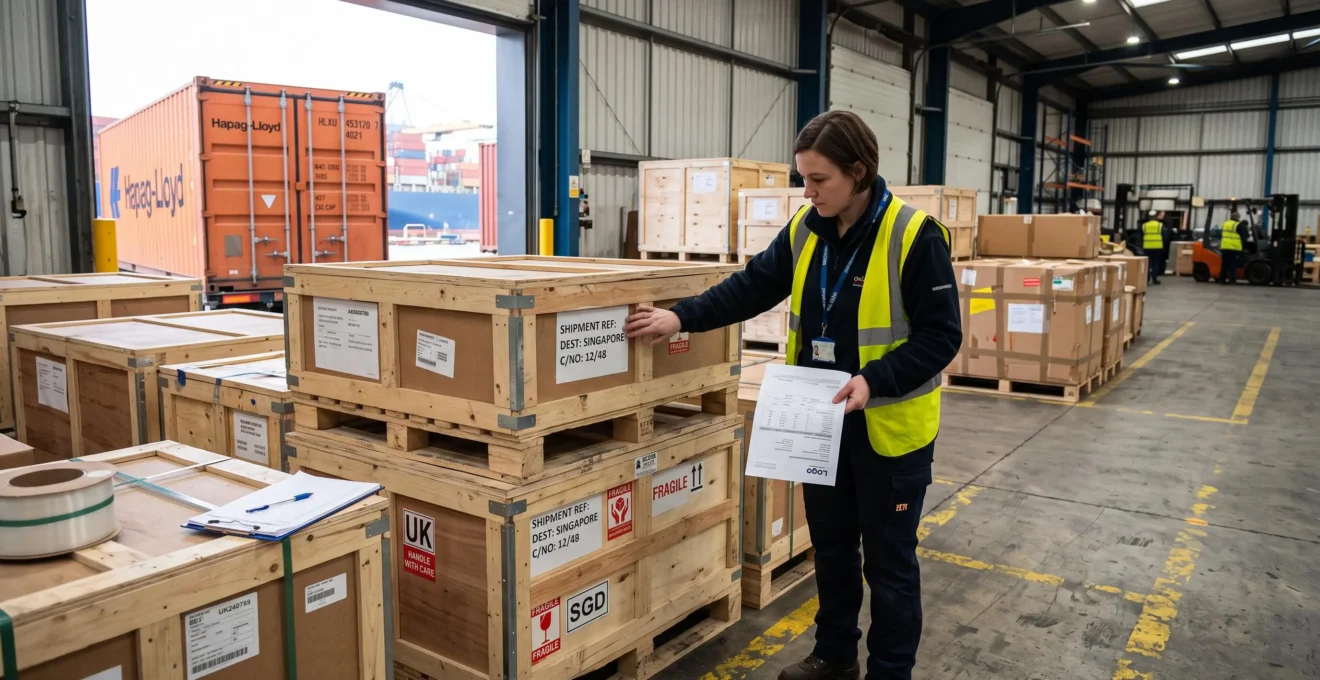
A product shipped from the United Kingdom to Canada does not automatically qualify for British preferential tariffs. Its customs treatment depends on where it legally originates, how it was manufactured, which trade agreement applies and whether the importer can substantiate the origin claim.
Under the UK-Canada Trade Continuity Agreement (TCA), qualifying originating goods may receive reduced or zero customs duties. Since 1 September 2026, businesses can also consider the Comprehensive and Progressive Agreement for Trans-Pacific Partnership (CPTPP). The two agreements operate alongside each other, but their origin rules and certification requirements are not interchangeable.
For importers and exporters, this distinction affects more than customs paperwork. An incorrect origin assumption can distort landed cost calculations, undermine contractual pricing and lead to retrospective duty assessments. Reliable origin determination therefore begins with the product’s manufacturing history and supporting evidence, not its shipping address or the nationality of its seller.
UK–Canada origin rules: essential points
- Country of export and country of origin are different concepts. Storage, transit and minor handling do not automatically change origin.
- Preferential tariffs depend on the applicable agreement, product-specific origin requirements and acceptable supporting documentation.
- Origin must be reassessed when sourcing, manufacturing, classification or relevant trade rules change.
- Why Is the Country of Export Not Always the Origin of the Goods?
- How Can Businesses Determine the Correct Origin of Goods Before Export?
- Preferential or Non-Preferential Origin: Which Rule Applies to Your Shipment?
- Origin Errors That Can Cause Preferential Tariff Claims to Fail
- When Should the Origin of Goods Be Reassessed?
- How Can Exporters Confirm Eligibility for Preferential Trade Terms Before Shipping?
- The Tariff Lookup Errors That Can Distort Your Landed Cost Calculation
- How Can Preferential Trade Terms Reduce the Cost of UK-Canada Commerce?
Why Is the Country of Export Not Always the Origin of the Goods?
The country of export identifies where a shipment is dispatched, while the country of origin reflects the legally relevant production or manufacturing history of the goods. A product can therefore leave a UK warehouse without being UK-originating. Customs authorities apply origin rules independently of the shipping route, supplier’s address or place of purchase.
Consider equipment manufactured in Japan, purchased by a British distributor and stored in a UK warehouse before shipment to Canada. The British distributor may issue the commercial invoice and arrange freight, but these activities do not automatically confer UK origin. Without qualifying production or another applicable origin provision, the goods cannot claim UK preferential origin simply because they were dispatched from Britain.
The distinction is particularly important in distribution networks that rely on consolidation hubs, bonded storage and re-export. Ordinary handling, such as affixing labels, sorting cartons or simple repackaging, generally cannot establish preferential origin by itself. The exact treatment of each operation must nevertheless be checked against the relevant agreement.
Transit through a third country is a separate issue. Goods that already qualify as originating may retain that status during permitted transit or storage, provided the applicable conditions, including customs supervision where required, are satisfied. Transit does not itself create origin.
HMRC‘s guidance on determining the origin of goods explains why the place of dispatch can differ from the place of production and how insufficient processing affects preferential eligibility.
Preferential origin determines whether a product qualifies under a specific trade agreement. Non-preferential origin serves other customs purposes, including trade measures and origin-related reporting. Their legal tests can differ, so the same product may require separate assessments.
The commercial consequences can be substantial. If an exporter prices a shipment on the assumption of zero duty, but Canadian customs later rejects its preferential origin, the importer may face additional duties and related compliance costs. The contractual allocation of those costs determines which trading partner ultimately bears the loss.
Once that distinction is established, the next task is to reconstruct the product’s production history and demonstrate which origin rule it actually meets.
How Can Businesses Determine the Correct Origin of Goods Before Export?
Businesses determine origin by classifying the finished product, identifying where its materials and components were produced, and applying the origin rule relevant to the intended customs treatment. A defensible assessment requires documented manufacturing processes, supplier evidence and calculations where applicable. The result should be traceable to a specific product, agreement and production arrangement.
For manufactured goods, the starting point is a bill of materials (BOM) showing the components used in each finished product. The BOM should connect each input to its supplier, manufacturing location, tariff classification and origin evidence. Materials purchased from a UK supplier should not automatically be treated as UK-originating.
The applicable product-specific rule may involve a change in tariff classification, a maximum value of non-originating materials, a specified manufacturing operation or a combination of conditions. Wholly obtained rules are especially relevant to goods such as certain agricultural products and raw materials. The precise test depends on the product and agreement.
A practical origin file should establish the applicable rule first, then demonstrate compliance using production records and verifiable supplier information. Where a value-based test applies, calculations must use the valuation definitions specified in that rule rather than a convenient internal cost estimate.
Written supplier declarations are valuable, but their reliability depends on their content. A useful declaration identifies the supplier and goods, specifies the claimed origin, refers to the relevant agreement where appropriate, and indicates the products or supply period covered. Supporting manufacturing or material records may be needed to verify the claim.
Multi-tier supply chains create additional uncertainty. An immediate supplier may repeat an origin statement received from another intermediary without understanding the original manufacturing process. For commercially significant preferential claims, critical inputs should be traced back to their actual producer rather than relying entirely on repeated assurances.
For uncertainty that cannot be resolved through available records, businesses may seek a formal determination. HMRC’s guidance on Advance Origin Rulings explains the procedure for goods imported into or exported from Great Britain. An Advance Origin Ruling is generally valid for three years under its conditions and is binding in the UK, not automatically on Canadian authorities. It is distinct from an Advance Tariff Ruling, which concerns classification.
Canadian importers can explore advance ruling procedures through the Canada Border Services Agency (CBSA) for matters within Canadian customs jurisdiction. The relevant application route depends on the question being determined.
Build a verifiable product origin file
- Confirm the finished product’s tariff classification and record the applicable commodity code with supporting classification notes.
- Compile a BOM identifying material suppliers, manufacturing locations and available origin evidence; retain a dated version.
- Identify the applicable product-specific rule and save the relevant rule reference for the chosen trade agreement.
- Test the product against that rule, documenting the tariff-shift analysis, permitted processing or value calculation where required.
- Obtain and review supplier declarations, resolve material evidence gaps, and approve a signed origin determination record for the product.
The completed file establishes an evidence base, but preferential eligibility still depends on which legal origin framework applies to the import transaction.
Preferential or Non-Preferential Origin: Which Rule Applies to Your Shipment?
Preferential origin rules apply when an importer seeks reduced customs duties under a particular trade agreement. Non-preferential origin rules apply to customs measures that do not depend on that preference. For UK–Canada shipments, businesses must first identify the intended agreement, then verify its product-specific rule and documentary requirements before claiming preferential treatment.
The UK-Canada TCA entered into force on 1 April 2021. Since 1 September 2026, the CPTPP has provided an additional potential route for qualifying UK–Canada trade. The agreements must be assessed separately: eligibility under one does not establish eligibility under the other.
The following comparison shows why origin assessments must identify their legal purpose rather than relying on a generic country-of-origin field.
| Criterion | Preferential origin | Non-preferential origin |
|---|---|---|
| Primary purpose | Determine eligibility for agreement-based tariff preferences. | Apply non-preferential customs and trade measures. |
| Applicable test | The product-specific rule in the selected agreement. | The relevant domestic non-preferential origin framework. |
| Evidence | Agreement-compliant origin documentation and supporting production records. | Evidence appropriate to the applicable non-preferential origin determination. |
| Tariff effect | May allow reduced or zero customs duty. | Does not itself establish entitlement to a preferential rate. |
A finished product may satisfy a non-preferential origin test associated with substantial transformation in Britain yet fail a trade agreement’s specific manufacturing or material requirement. Conversely, an agreement’s special provisions may produce an originating determination that cannot simply be transferred to another customs context.
The fundamental distinction for manufactured products is between qualifying production under a product-specific rule and merely performing an operation that changes their commercial presentation. For wholly obtained goods, the analysis typically centres on where the relevant natural product was produced, harvested or extracted, subject to the detailed legal definition.
Before a preferential rate is used, three questions must receive affirmative answers:
- Is an applicable trade agreement available for the product and transaction?
- Does the product satisfy that agreement’s origin requirements?
- Can the claim be supported by the prescribed documentation and underlying records?
Hypothetical example: the duty impact of origin
Suppose a shipment has an illustrative Canadian customs value of CAD 50,000, an assumed standard duty rate of 8%, and a preferential rate of 0% if all conditions are met. These percentages are hypothetical and are not quoted as actual rates for any particular product.
Standard duty would be CAD 4,000, compared with CAD 0 under a valid preferential claim. The hypothetical CAD 4,000 difference illustrates why tariff eligibility must be established before landed cost and customer pricing are finalised.
Even where the product genuinely qualifies, documentation mistakes can cause the claimed tariff benefit to be rejected.
Origin Errors That Can Cause Preferential Tariff Claims to Fail
Preferential tariff claims can fail because the declared origin is incorrect, the product does not satisfy its agreement-specific rule, or the required origin evidence is missing or defective. A genuine UK manufacturing connection is not sufficient on its own. The exporter and importer must support the particular preferential treatment claimed at customs.
Recurring failures include copying the country of dispatch into the origin field, overlooking non-originating components, using outdated supplier declarations and relying on an incorrect tariff classification. Applying the TCA’s origin rules while submitting a claim under CPTPP, or vice versa, creates another avoidable compliance risk.
The documentation requirements are especially important because the agreements use different certification arrangements.
For the UK-Canada TCA, an exporter completes the prescribed origin declaration on an invoice or another acceptable commercial document. The description must identify the originating goods sufficiently. UK exporters must include their EORI number regardless of shipment value. A bill of lading is not an acceptable substitute for the specified origin declaration.
The CBSA’s memorandum on proof of origin for imported goods describes Canadian requirements for TCA declarations, records and corrections. It identifies UKT, tariff treatment code 34, for the agreement and provides for origin declarations covering multiple shipments of identical originating goods over a specified period not exceeding 12 months.
Importer-based certification must not be assumed to apply to every agreement. CPTPP contains certification mechanisms that differ from the TCA’s exporter-origin declaration system. Where an importer uses a permitted certification basis under CPTPP, that importer must have the information necessary to substantiate the claim and comply with the relevant certification and record-keeping requirements. Importer knowledge is not a general alternative to missing TCA exporter declarations.
For Canadian imports, the CBSA memorandum specifies a six–year record-retention requirement for importers. A missing certificate or unsupported origin assertion may expose the importer to reassessment, additional duty and applicable administrative penalties.
When an error is identified after importation, the relevant parties should determine whether the origin declaration or customs accounting must be corrected. Canadian law contains specific correction obligations and time limits; the memorandum discusses a 90-day provision concerning corrections after obtaining reason to believe origin information is incorrect. That provision is not a blanket exemption from duties or penalties.
Voluntary disclosure may be relevant where an error falls within the CBSA’s applicable disclosure framework. Its availability and consequences depend on the circumstances, so proactive correction should not be treated as an automatic guarantee of penalty relief.
Contractual exposure can extend beyond the customs assessment. Where a seller has agreed to absorb import duties, an unexpected reassessment can eliminate the margin originally anticipated on the transaction. Accurate origin representations and clear allocation of customs responsibilities therefore matter commercially as well as legally.
Once a claim is properly substantiated, the remaining challenge is ensuring that the evidence continues to reflect the product actually being shipped.
When Should the Origin of Goods Be Reassessed?
The origin of goods should be reassessed whenever a change could affect the manufacturing process, input origins, product classification or applicable trade agreement rules. A valid assessment is not permanently attached to a product name or SKU. It depends on the product and the relevant circumstances underlying the original determination.
Changes that should trigger a review include switching component suppliers, moving a production operation, redesigning a product, introducing inputs from another country or modifying the proportions of non-originating materials. A new tariff classification can also change which product-specific rule must be satisfied.
This creates a risk of origin drift: the product may qualify when first assessed but gradually cease to meet the rule after procurement or engineering changes. An origin declaration can then remain in use even though its underlying calculation or production evidence is outdated.
For example, a UK manufacturer might replace a qualifying component with a cheaper imported alternative. Whether the product retains preferential origin depends on its applicable rule and the effect of the new input. The cost saving from sourcing could be outweighed by the resulting duty liability if preferential eligibility is lost.
Regulatory changes can also require reassessment independently of manufacturing changes. Under the TCA, the former arrangements allowing certain EU materials to be treated as originating for UK exports to Canada expired on 1 April 2024. Continuing to apply those expired arrangements could therefore produce an unsupported claim.
The emergence of CPTPP as an additional UK–Canada trading option on 1 September 2026 provides another reason to revisit established origin files. A product that does not qualify under one agreement may warrant a separate assessment under the other, but the available tariff schedules and certification requirements must also be considered.
A practical control is to make origin review a mandatory stage in procurement and product change approval. Before a new supplier, component or production site is authorised, the responsible team should assess any effect on origin qualification and update the supporting file.
Periodic reviews remain useful, particularly where material costs or global sourcing arrangements fluctuate, but they should supplement rather than replace event-driven checks.
With those controls in place, exporters can perform a final eligibility review before the shipment enters the customs process.
How Can Exporters Confirm Eligibility for Preferential Trade Terms Before Shipping?
Exporters should confirm preferential eligibility before dispatch by checking the product’s HS classification, selecting the applicable trade agreement, testing the product against its origin rule and preparing the required documentation. The Canadian importer should verify the intended tariff treatment independently. Both parties need a consistent, evidence-backed position before the commercial invoice and customs declaration are finalised.
The first step is to establish the correct tariff classification and identify the rule that applies under the chosen agreement. The UK-Canada TCA’s product-specific rules refer to the 2012 Harmonised System nomenclature, so a current tariff code may need to be reconciled with the nomenclature used in the agreement.
Exporters should consult the UK Trade Tariff for relevant classification and export information, alongside Canada’s Customs Tariff and CBSA resources for the Canadian import treatment. An apparent preferential rate in a tariff schedule does not, by itself, establish that a specific shipment qualifies.
Next, the origin determination should be checked against current manufacturing records, component sourcing and supplier declarations. Where uncertainty materially affects the transaction, a ruling from the competent authority can provide greater clarity. An HMRC origin ruling does not replace Canadian customs requirements or bind the CBSA automatically.
The documentary stage depends on the agreement chosen. Under the TCA, the exporter provides the prescribed origin declaration, while the Canadian importer is responsible for making and supporting the preference claim. Under CPTPP, its own certification rules must be followed. Exporters and buyers should record which agreement they intend to use rather than assuming the customs broker will select the most advantageous one.
Low-value consignments and split shipments deserve the same discipline. Simplified customs procedures or particular documentary exceptions, where applicable, should not be mistaken for automatic satisfaction of origin requirements. Consistent product descriptions, origin records and declarations across shipments also help the importer respond to later verification requests.
Before release, the parties should align the commercial invoice, origin documentation, customs classification, intended tariff treatment and agreed responsibility for import charges. This reduces the risk of discovering a disagreement only after the shipment arrives in Canada.
That confirmed eligibility can then be incorporated into the landed cost calculation without confusing a possible tariff preference with an established one.
The Tariff Lookup Errors That Can Distort Your Landed Cost Calculation
Tariff lookup errors distort landed cost when businesses select an incorrect commodity code, apply a preferential rate without confirmed eligibility, or calculate duty using the wrong customs value. UK–Canada shipments require separate checks of classification, the selected trade agreement and Canadian import charges. A published tariff rate is only one element of the final cost.
A common mistake is confusing the UK Global Tariff with the rate payable on goods imported into Canada. The UK Global Tariff generally concerns imports into the United Kingdom; Canadian import duty must be assessed using Canada’s tariff framework and the appropriate preferential treatment, if available.
Another error is checking only the broad HS heading without resolving the detailed Canadian tariff classification. Duty rates, additional measures and product-specific origin rules can depend on finer distinctions than a general product description.
Where a product appears eligible under both the TCA and CPTPP, the rates and conditions should be compared on a like-for-like basis. A lower listed rate offers no benefit if the product fails the relevant origin rule or cannot meet the agreement’s documentation requirements.
Customs valuation adds further complexity. Canadian import duties are generally calculated on the value for duty determined under Canadian customs valuation rules, converted into Canadian dollars using the applicable customs exchange rate. That value is not necessarily identical to the commercial invoice total or an all-inclusive freight quotation.
The treatment of freight, insurance and other adjustments depends on the relevant valuation rules. Import GST and any applicable excise taxes or trade measures must also be considered separately. Applying the wrong exchange rate or omitting a required valuation adjustment can therefore distort more than the basic duty calculation.
A practical landed cost model should distinguish the confirmed preferential scenario from the standard-duty contingency.
| Cost component | Qualifying preference | No preferential eligibility |
|---|---|---|
| Assumed customs value | CAD 50,000 | CAD 50,000 |
| Hypothetical duty rate | 0% | 8% |
| Calculated customs duty | CAD 0 | CAD 4,000 |
| Other import charges | Calculated separately | Calculated separately |
| Origin compliance condition | Agreement requirements satisfied | Preference unavailable or unsupported |
The example is not an actual Canadian tariff quotation. Real rates and customs values must be established for the specific goods, import date and applicable agreement.
Running both scenarios shows the exposure created by an unsuccessful origin claim. It also helps businesses determine whether additional supplier verification, production changes or a formal ruling are commercially worthwhile.
Once the duty difference is quantified, preferential origin compliance becomes part of a wider commercial decision about pricing, sourcing and market competitiveness.
Key takeaways for UK–Canada traders
- Compare the TCA and CPTPP on both eligibility and applicable tariff rates, rather than assuming one agreement is always preferable.
- Measure the potential duty saving against the evidence, sourcing and compliance effort required to secure it.
- Use confirmed origin eligibility to inform pricing and contractual decisions, with a contingency for rejected claims.
How Can Preferential Trade Terms Reduce the Cost of UK-Canada Commerce?
Preferential trade terms reduce UK–Canada trading costs by allowing qualifying goods to enter the destination market at lower customs duty rates than would otherwise apply. Under the UK-Canada TCA or CPTPP, the potential saving depends on the product, its origin, the relevant tariff schedule and compliance with the selected agreement’s requirements.
The UK-Canada TCA, in force since 1 April 2021, preserves important preferential trading arrangements following the UK’s departure from the European Union. Its tariff provisions can reduce or eliminate duties on qualifying originating goods, subject to product-specific rules, tariff-rate quotas and other applicable conditions.
Since 1 September 2026, CPTPP has provided an additional option for bilateral trade. The agreements coexist, giving businesses an opportunity to assess which framework offers the more suitable tariff treatment and origin requirements for a particular shipment.
The UK government guidance on trade with Canada outlines the TCA’s tariff arrangements, origin requirements and the availability of CPTPP for UK–Canada trade.
Duty savings can support different commercial strategies. An exporter may use a verified preference to offer Canadian customers more competitive prices, absorb part of the international freight cost or improve its operating margin. The benefit depends on who is contractually responsible for import duties and how the agreed selling price is structured.
For example, where a confirmed preference reduces customs duty on a shipment, a seller delivering under terms that make it responsible for import clearance and applicable duties may retain more margin or adjust its quotation. Where the buyer handles importation, the direct duty saving may instead strengthen the buyer’s purchasing economics.
The greatest potential benefits generally arise where the gap between the standard duty rate and an available preferential rate is commercially significant. Products already subject to low or zero standard duties may offer limited additional savings, making extensive origin qualification work less attractive purely as a duty-reduction exercise.
Supply chain structure matters as well. Manufacturers with reliable visibility over their production processes and component origins may find it easier to demonstrate preferential eligibility. Businesses relying on complex international inputs can still qualify where the relevant rules permit, but may need more extensive calculations and supplier verification.
Preferential treatment should therefore be evaluated through a product-level comparison of applicable duty rates, compliance requirements and the cost of obtaining dependable origin evidence. It should not automatically be assumed that the preferential rate under either agreement is lower than the currently applicable standard tariff.
The commercial benefit only becomes real when the origin claim is valid and maintainable. A prospective duty reduction that cannot be demonstrated to Canadian customs should remain a conditional scenario, not a guaranteed saving in the selling price.
For the next shipment, select the intended agreement, verify the product-specific origin rule, assemble the required evidence and confirm the Canadian import treatment with the importer or customs adviser. HMRC and CBSA guidance provide the official starting points; specialist advice may be appropriate where complex production, uncertain classification or substantial duty exposure is involved.
Can goods imported into the UK from another country become UK-originating after repackaging?
Simple repackaging or relabelling does not normally confer preferential UK origin. Goods must satisfy the applicable agreement’s origin rules, including any restrictions on insufficient production. More substantial manufacturing must be assessed against the particular product-specific rule rather than assumed to qualify automatically.
Can a business choose between the UK-Canada TCA and CPTPP?
Yes. Since 1 September 2026, CPTPP has applied to trade between the UK and Canada alongside the TCA. Businesses may compare the available tariff treatment and requirements, but must satisfy the origin and documentary conditions of the agreement used for the customs claim. The two agreements’ rules cannot be combined selectively.
How long can a UK-Canada TCA origin declaration cover repeated shipments?
Under the TCA, an origin declaration may cover multiple shipments of identical originating products during a specified period not exceeding 12 months. The products must continue to meet the relevant origin requirements throughout the period. A change affecting origin eligibility may require reassessment and revised documentation.
Does an HMRC Advance Origin Ruling guarantee acceptance by Canadian customs?
No. An HMRC Advance Origin Ruling provides a legally binding determination within its applicable UK jurisdiction and conditions, generally valid for three years. It does not automatically bind the CBSA. Where certainty about Canadian import treatment is required, the importer should consider the relevant Canadian advance ruling procedures.
Can preferential duty be recovered after goods have already been imported into Canada?
Potentially. Canadian customs procedures may permit eligible importers to request a refund or adjustment of duties where preferential treatment was not initially claimed. The applicable deadline, evidence requirements and procedure depend on the circumstances and agreement. A later claim still requires proof that the goods qualified under the relevant origin rules when imported.