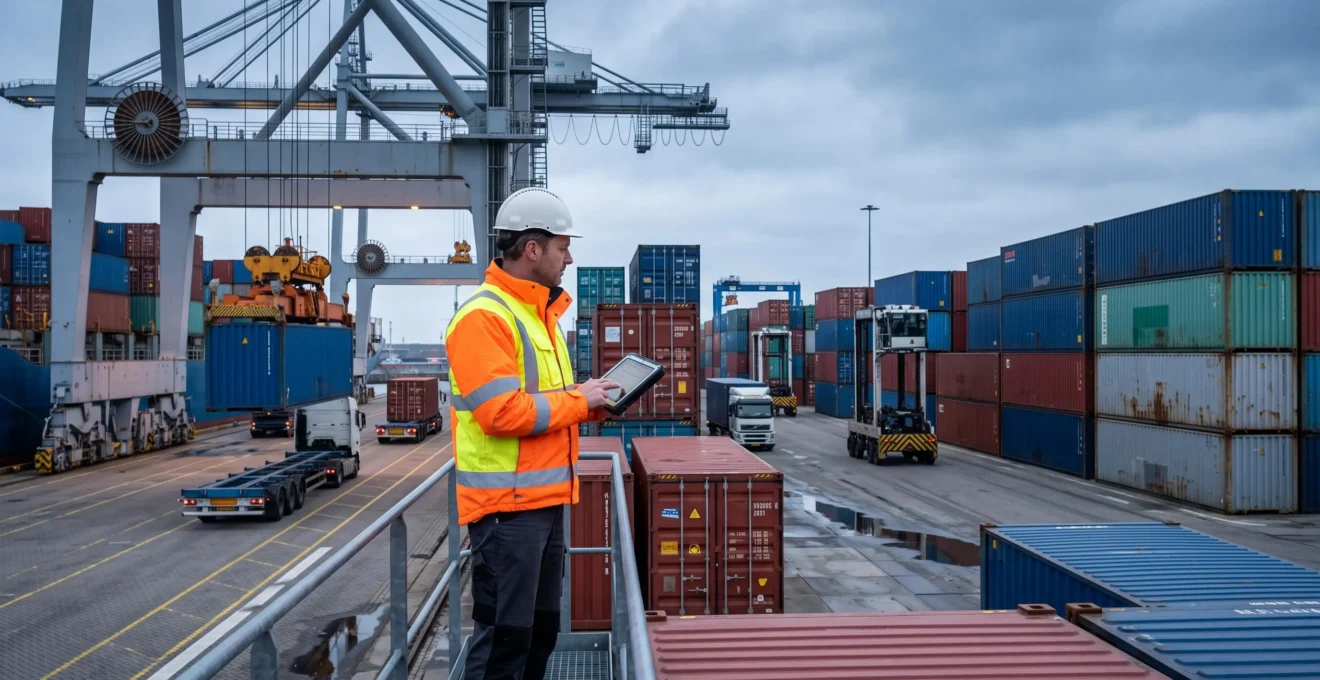
Shared supply chains can strengthen UK-Canada business relationships by turning occasional purchasing arrangements into coordinated production, logistics and information networks. When manufacturers and suppliers plan capacity together, exchange reliable forecasts and invest in compatible processes, they can improve service continuity while creating stronger incentives for long-term cooperation.
The commercial opportunity extends beyond transportation savings. British manufacturers may access Canadian production capabilities, specialised materials or North American distribution infrastructure, while Canadian businesses can use UK partnerships to develop manufacturing capabilities and reach British customers more efficiently.
However, integration does not automatically deliver lower costs or greater resilience. Transatlantic lead times, regulatory obligations, exchange-rate exposure and supplier concentration can offset the benefits of shared infrastructure.
The central strategic question is therefore not whether UK and Canadian businesses should integrate their supply chains, but which activities should be shared, how deeply they should be connected and what safeguards should preserve operational flexibility.
UK-Canada supply-chain integration: essential decisions
- Shared infrastructure and coordinated planning can strengthen commercial relationships when both partners contribute resources and share operational responsibility.
- Companies should compare local, integrated and hybrid production models using total landed costs, inventory requirements, regulatory compliance and disruption exposure.
- Gradual integration, multi-tier supplier visibility and explicit exit arrangements help preserve the advantages of cooperation without creating excessive dependence.
- Why Do Shared Supply Chains Create Stronger Long-Term Business Relationships?
- How Can UK and Canadian Firms Build a More Integrated Supply Chain?
- Local Production or Shared Supply Chain: Which Model Fits Your Business?
- The Dependency Risks Hidden Inside Highly Integrated Supply Chains
- When Should UK and Canadian Firms Integrate Their Supply Chains More Closely?
- How Can Companies Design a UK-Canada Production and Distribution Network?
- The Hidden Concentration Risks Inside an Established International Supply Chain
- How Can UK and Canadian Firms Build Integrated Production and Distribution Networks?
Why Do Shared Supply Chains Create Stronger Long-Term Business Relationships?
Shared supply chains can create stronger business relationships because cooperating companies become invested in each other’s operational performance. Joint logistics arrangements, common quality standards and coordinated production schedules make reliable collaboration more valuable than repeated short-term price negotiations. These benefits emerge when commitments are balanced, information is exchanged openly and both partners retain reasonable commercial flexibility.
A transactional supplier relationship centres on individual purchase orders. The buyer compares quotations, selects a supplier and pays for goods delivered under agreed conditions. The supplier may have little visibility into the buyer’s longer-term production requirements.
An integrated relationship works differently. Both organisations may commit to dedicated production capacity, shared inventory arrangements, compatible information systems or recurring freight services. These are relationship-specific investments: their value partly depends on the continued success of the partnership.
Such investments increase switching costs. Replacing a partner can require new supplier qualification, revised tooling, changes to enterprise systems and fresh logistics contracts. Both parties consequently have stronger reasons to resolve disagreements before terminating cooperation.
Trust develops through repeated operational performance rather than contractual commitments alone. Shared forecasting, transparent quality reporting and consistent handling of delivery problems allow companies to demonstrate reliability over time.
Consider a hypothetical Canadian component manufacturer supplying a UK equipment producer. If both businesses share rolling production forecasts and reserve shipping capacity, a machinery failure at the Canadian facility affects more than one isolated order. The manufacturer has an incentive to warn its customer immediately, while the UK partner can help evaluate alternative production schedules or temporary inventory allocation.
Early disclosure becomes commercially useful because both businesses are exposed to the disruption. This can encourage joint problem-solving, provided the relationship includes realistic recovery procedures and does not penalise honest reporting disproportionately.
Integration also has a potential disadvantage: the same investments that encourage cooperation can trap businesses in an unsuitable arrangement. If demand changes or a partner loses technical competitiveness, the cost of replacing shared infrastructure may delay necessary decisions.
Contracts should therefore include periodic performance reviews, renegotiation mechanisms, responsibilities for jointly developed assets and a workable transition process.
Commercial resilience is strongest when partners build trust through operational evidence while preserving the freedom to redesign their relationship as markets change.
How Can UK and Canadian Firms Build a More Integrated Supply Chain?
UK and Canadian companies can integrate their supply chains by mapping physical movements, information exchanges and financial commitments before selecting a cooperation model. They should then align product specifications, forecasting processes, customs responsibilities and logistics arrangements through a limited pilot. Long-term contracts, joint ventures and third-party logistics platforms offer different levels of investment, control and operational flexibility.
The first task is to understand how the existing relationship actually operates. Companies often focus on shipping routes while overlooking the information and payment processes that determine whether goods move reliably.
A practical diagnostic should examine three connected systems:
- Physical flows: where components originate, where they are transformed, how inventory is stored and which transport corridors carry finished goods.
- Information flows: forecast accuracy, purchase-order transmission, inventory visibility, traceability records and exception reporting.
- Financial flows: payment terms, currency exposure, trade finance, letters of credit and the allocation of working-capital requirements.
Integrating only one system can create a bottleneck elsewhere. A shared warehouse may accelerate dispatch, for example, but limited visibility into customer forecasts could still generate shortages or excess inventory.
Companies must also distinguish trade-agreement opportunities from operational compliance. The Canada-UK Trade Continuity Agreement entered into force on 1 April 2021 and remains relevant to bilateral trade. Since 1 September 2026, the Comprehensive and Progressive Agreement for Trans-Pacific Partnership (CPTPP) has provided an additional framework for eligible UK-Canada trade.
The UK government guidance on trade with Canada explains that preferential treatment depends on applicable product-specific rules of origin and other agreement requirements. Companies should not assume that a component originating in another country qualifies automatically under either framework.
Compliance planning must also cover applicable product certification, customs documentation and Canadian labelling or language requirements. These obligations can influence manufacturing locations and packaging design before products are shipped.
Three commercial models are particularly relevant.
| Model | Suitable circumstances | Main limitation |
|---|---|---|
| Long-term supply contract | Predictable purchasing volumes and a need for coordinated capacity | Limited direct control over supplier assets |
| Joint venture | Strategic capabilities requiring substantial joint capital and governance | Higher financial commitment and complex decision-making |
| Third-party logistics platform | SMEs consolidating shipments or testing demand in another market | Dependence on the logistics provider’s service network |
For smaller manufacturers, a third-party logistics provider operating through established UK and Canadian networks can be a practical starting point. Consolidation warehouses may combine shipments, coordinate customs processes and distribute inventory without requiring the partners to construct dedicated facilities.
Before committing to any model, managers should agree on shipment visibility, inventory ownership, service-level expectations and responsibility for exceptions. A contract cannot substitute for operational processes that both companies understand and regularly test.
The next decision is whether particular products genuinely benefit from cross-border coordination or would perform better within a more local manufacturing structure.
Local Production or Shared Supply Chain: Which Model Fits Your Business?
Local production generally becomes more attractive when rapid response, strategic control or short lead times outweigh the potential efficiencies of cross-border sourcing. Shared supply chains are often better suited to stable, standardised products with predictable demand and manageable logistics costs. A hybrid model can combine both advantages, with sourcing decisions made at product level rather than across an entire business.
Four variables provide a useful starting point for the decision: component criticality, demand volatility, labour intensity and traceability requirements.
A strategically critical component may justify local capacity when a prolonged shortage would stop production. High demand volatility can also favour local manufacturing because shorter replenishment cycles reduce the exposure associated with forecasting errors.
By contrast, stable products requiring specialised equipment may benefit from shared capacity if production volumes support efficient scheduling and the transport costs remain proportionate.
Labour intensity matters because wage structures, productivity, automation and skills availability differ between production locations. Traceability requirements may support either model: local production can simplify oversight, while a well-designed shared network may offer equally effective records through integrated systems.
These variables should guide analysis rather than operate as rigid rules. A highly critical product could still be sourced internationally when a qualified supplier maintains redundancy, adequate inventory and reliable recovery capacity.
The financial comparison must also move beyond factory-gate prices.
| Cost or risk factor | Local production | Shared international supply chain |
|---|---|---|
| Production economics | Local labour, equipment and utilisation | Partner production cost and scale efficiencies |
| Transport and customs | Primarily domestic distribution | International freight, clearance and applicable duties |
| Working capital | Potentially shorter replenishment inventory | Potentially more pipeline and safety stock |
| Regulatory obligations | Domestic production and market compliance | Origin documentation, import rules and market compliance |
| Disruption exposure | Local capacity and infrastructure risks | Supplier, shipping and border-related risks |
| Flexibility | Depends on local capacity availability | Depends on contracts and alternative sources |
The appropriate calculation is an expanded total cost of ownership that includes procurement, transport, inventory financing, quality failures, regulatory compliance and the expected commercial consequences of interrupted supply.
As a hypothetical example, a UK equipment manufacturer might locally produce customised components required within days while sourcing standard assemblies from a Canadian production partner. The same company could hold limited local safety stock for assemblies with longer replenishment times.
The decision can be calculated separately for each stock-keeping unit (SKU). Managers should compare forecast demand, replenishment costs, service requirements and feasible capacity under multiple scenarios to identify when one model becomes financially preferable.
More than 18%
Potential reduction in global trade under the broad supply-chain relocalisation scenarios modelled by the OECD. This is a global scenario result, not an estimate of UK-Canada trade losses or company-level savings.
The OECD analysis illustrates why relocating production should not be treated as a universal resilience solution. Its modelling also suggests that broad relocalisation does not consistently reduce economic volatility.
Decision-makers should watch for two biases. Political pressure or national preference can encourage investment in uneconomic local capacity, while excessive attention to current freight prices can obscure longer-term scale or productivity advantages.
The strongest arrangement may therefore be a deliberately mixed production portfolio rather than complete localisation or complete international integration.
The Dependency Risks Hidden Inside Highly Integrated Supply Chains
Highly integrated supply chains create dependency risks when companies cannot replace essential production capacity, transfer specialised expertise or exit restrictive commercial agreements. These risks become more serious when lower-tier suppliers are invisible or one partner has disproportionate bargaining power. Resilience requires separating each type of dependency and applying specific safeguards rather than treating supplier concentration as a single problem.
Three forms of dependency deserve separate assessment.
- Capacity dependency: an alternative factory cannot manufacture the required volume within an acceptable timeframe. Mitigation may require qualified secondary suppliers, reserved capacity or strategic inventory.
- Competence dependency: a supplier possesses specialised knowledge, technical processes or engineering experience that cannot be transferred quickly. Mitigation may involve documented procedures, training, intellectual-property arrangements and carefully governed technical collaboration.
- Contractual dependency: exclusivity, minimum-volume commitments or asset ownership provisions restrict alternative sourcing. Mitigation requires negotiated flexibility, review clauses and feasible termination arrangements.
A company may face several forms simultaneously. A Canadian supplier could own specialised tooling, employ the only personnel qualified to operate it and hold a multi-year exclusive contract with a UK customer.
Replacing that supplier would then require more than finding another manufacturer. The buyer might need to secure technical rights, transfer production knowledge, purchase equipment and qualify a new factory.
Lower-tier suppliers create an additional difficulty. A UK manufacturer may have excellent visibility into its Canadian direct supplier but little knowledge of the material processors or specialised subcontractors supporting that supplier.
If an upstream facility stops operating, the interruption can affect finished-product availability even though the UK buyer has no direct commercial relationship with the affected business.
The UK government’s supply-chain resilience framework identifies diversification, international partnerships, stockpiling and surge capacity, onshoring and demand management as possible approaches to reducing supply risks. It also emphasises the importance of information and visibility in decision-making.
Asymmetric commercial dependence should receive equal attention. If one customer represents most of a supplier’s production volume, that customer may have strong negotiating power. Continued pressure on prices or payment terms could undermine the supplier’s ability to maintain equipment, retain skilled workers or invest in quality.
Short-term purchasing savings can therefore weaken the production capability on which the buyer relies.
A practical dependency dashboard should measure the proportion of volume handled by each critical partner, the realistic time needed to qualify an alternative and the availability of contractual backup capacity. It should also identify where audit rights, subcontractor disclosures or data-sharing arrangements stop short of the relevant risk.
These indicators need to reflect operational reality. Listing an alternative supplier provides little reassurance if that supplier lacks available capacity or requires lengthy certification.
Integration becomes more sustainable when both partners can demonstrate credible recovery options without undermining the commercial benefits of cooperation.
When Should UK and Canadian Firms Integrate Their Supply Chains More Closely?
UK and Canadian businesses should consider deeper supply-chain integration when purchasing volumes, operational maturity and expected long-term benefits justify additional fixed commitments. Reliable forecast sharing, successful joint problem-solving and stable demand provide stronger evidence than market opportunity alone. Regulatory changes, competitive pressure and financing conditions can influence timing, but deeper integration should follow a tested commercial case.
Internal triggers may include growing order volumes, consistently utilised shared logistics services or a successful initial supply agreement approaching renewal. At that point, dedicated capacity, integrated forecasting or jointly financed inventory may become economically reasonable.
External triggers can include changes in trade-agreement eligibility, revised product regulations, new competitive capacity or changes to the relative economics of sourcing from the UK and Canada.
The Canada-UK Trade Continuity Agreement and CPTPP provide different rules-of-origin frameworks. The Canadian government’s Trade Commissioner Service comparison of UK trade agreements explains that some products failing to qualify under one agreement may qualify under the other, depending on their sourcing and the applicable conditions.
This can influence manufacturing location and component procurement decisions. However, agreement eligibility should be tested against the actual product classification, bill of materials and production processes before changing a supply chain.
Commercial readiness also needs a relationship-maturity test. Before integrating systems or committing to shared assets, managers should review whether the partnership already demonstrates:
- Consistent and timely exchange of operational information.
- Forecasts that both organisations use in capacity planning.
- Documented examples of joint incident resolution.
- Agreed responsibility for quality, delivery and inventory exceptions.
- Trustworthy performance reporting and an effective escalation process.
Without this foundation, deeper technical integration may simply automate misunderstandings or conceal conflicting commercial incentives.
The macroeconomic environment adds another dimension. Interest rates affect the financing cost of warehouses, equipment and digital infrastructure. Movements between sterling and the Canadian dollar alter the relative expense of production and the value of cross-border payments.
These variables should be addressed through sensitivity testing rather than attempts to predict a single favourable exchange rate or financing window.
Premature investment is particularly costly when demand remains uncertain. A dedicated warehouse, exclusive manufacturing arrangement or extensive software integration can create recurring expenses and exit obligations before shipment volumes support them.
A phased approach allows a company to increase operational coordination first, verify its performance and commit to fixed assets only when recurring benefits become sufficiently credible.
Once that readiness exists, the next challenge is designing the physical production and distribution network around real demand rather than organisational preference.
How Can Companies Design a UK-Canada Production and Distribution Network?
Companies can design a UK-Canada production and distribution network by forecasting demand for each market and SKU, comparing alternative manufacturing locations and modelling their total operating costs. The analysis should include shipping times, customs requirements, inventory needs, currency exposure and regional delivery performance. Network decisions should also distinguish long-lived manufacturing assets from logistics arrangements that can be revised more frequently.
The starting point is a demand model covering customer locations, order frequency, seasonal variation, service expectations and product-specific constraints.
Managers can then evaluate three broad configurations: UK manufacturing with Canadian distribution, Canadian manufacturing with UK distribution, and production capacity maintained in both markets.
Each scenario should be evaluated over a three-to-five-year financial planning horizon, with longer-term implications assessed separately for capital-intensive facilities.
Relevant inputs include facility costs, production utilisation, international freight, customs processing, domestic distribution, working capital, inventory obsolescence and the potential financial impact of service interruptions.
Exchange rates and freight prices should be tested across alternative scenarios. A location that appears attractive under current assumptions may become less competitive if transport costs rise or currency movements change imported input costs.
Network design also involves decisions with different lifespans. A factory may be intended to operate for a decade or longer. A regional warehouse lease could involve a medium-term commitment, while freight contracts and carrier allocations can often be reviewed more frequently.
Treating all three decisions as equally reversible can produce a network that is efficient on paper but expensive to adapt.
For Canadian distribution, geography matters. A single consolidation hub can simplify inventory management, but the distance between Canadian customer regions may increase domestic transport costs and delivery times.
Multiple regional fulfilment centres can improve responsiveness in sufficiently dense markets, although they also require more inventory, additional handling and greater coordination.
There is no universal shipment-volume threshold at which regional warehouses become preferable. The decision depends on order density, product characteristics, delivery promises and the costs of operating additional locations.
Customs processing should be modelled as part of the network rather than treated as an administrative task after the transport route has been selected. Classification, preferential-origin eligibility, documentation and border procedures can materially influence the availability of goods.
Canadian packaging and labelling requirements, including applicable bilingual requirements, should be incorporated before finalising inventory locations or distribution responsibilities. Product-specific sanitary and technical rules require similar consideration where applicable.
Five deliverables for a UK-Canada network design study
- Map demand: produce a SKU-by-market matrix showing forecast volumes, customer locations and required delivery windows.
- Build alternative configurations: prepare a network map for UK-led, Canada-led and dual-production scenarios, identifying facilities and transport connections.
- Calculate total costs: create a three-to-five-year financial model including freight, inventory, customs-related costs and currency sensitivities.
- Validate regulatory feasibility: compile a product-level compliance register covering classification, origin eligibility, certification and applicable labelling requirements.
- Stress-test operational performance: produce a scenario comparison showing service impacts, recovery times and the decision criteria for choosing a preferred network.
The resulting business case should compare more than average cost per unit. It should reveal the trade-offs between service performance, capital requirements, geographic concentration and the ability to recover from interruptions.
Even a well-designed network can become vulnerable over time, particularly when repeated efficiency improvements consolidate activity around a small number of critical nodes.
The Hidden Concentration Risks Inside an Established International Supply Chain
Established international supply chains can conceal concentration risks even when companies purchase from multiple suppliers. Different manufacturers may rely on the same port, shipping service, subcontractor, warehouse or technology platform. A disruption at that shared point can interrupt several supposedly independent supply routes simultaneously, making infrastructure-level visibility as important as direct supplier diversification.
Visible concentration is relatively straightforward to identify. A purchasing dashboard can reveal when one supplier provides most of a critical component or when a single factory handles a large share of production.
Invisible concentration is more difficult because separate suppliers can depend on common infrastructure.
For example, three independent Canadian suppliers might dispatch products through the same export corridor. Their commercial independence provides limited protection if a severe infrastructure disruption makes that corridor unavailable.
A similar risk exists when several suppliers rely on one logistics software provider or a shared specialist subcontractor. Failure of that common service can affect multiple organisations at once.
Geographic concentration is especially important for long-distance trade. Consolidating UK-Canada shipments through a limited set of ports and inland corridors may reduce routine handling costs, but it can also increase exposure to weather-related interruptions, industrial action or infrastructure failures.
Concentration analysis should therefore examine transport nodes, upstream production dependencies and critical digital services alongside conventional supplier categories.
The OECD‘s 2025 resilience review reports that approximately share of global exports that are highly concentrated among a limited number of trading partners30 % are highly concentrated among a limited number of trading partners. This is an international measure, not an estimate of UK-Canada corridor concentration, but it underlines the relevance of identifying where supply relationships are geographically or commercially clustered.
A practical stress test involves removing one critical node from the network model at a time. The company then estimates the consequences for inventory availability, customer deliveries, revenue at risk and time required to restore service.
The analysis can compare possible interventions, such as reserving alternative freight capacity, maintaining backup distribution arrangements or increasing targeted safety stock.
These safeguards have costs. Redundancy should therefore be prioritised according to the severity of disruption, the practicality of recovery and the exposure of commercially critical products.
One counterintuitive risk is that successful procurement optimisation can gradually make the network more fragile. Consolidating suppliers, carriers or warehouses may produce volume discounts while silently increasing the number of products exposed to a common point of failure.
Concentration should consequently be reassessed after major purchasing renegotiations, network redesigns and changes to logistics contracts, not only following an actual disruption.
The objective is not to eliminate every shared dependency, but to make the most consequential ones visible and establish recovery options proportionate to their business impact.
Key takeaways before implementation
- Start with a product category where demand and operational performance can be measured reliably, rather than attempting to integrate the entire supply network immediately.
- Agree on joint decision-making rights, shared performance indicators and escalation responsibilities before investing in tightly connected systems or facilities.
- Require evidence that each integration stage improves economic performance or service continuity without creating unacceptable concentration or exit costs.
How Can UK and Canadian Firms Build Integrated Production and Distribution Networks?
UK and Canadian firms can build integrated production and distribution networks through a staged implementation programme that combines operational pilots, shared governance and compatible information systems. Successful integration requires more than connecting factories and warehouses: partners must establish common performance indicators, responsibilities for disruption management and practical methods for coordinating teams across both markets.
A phased implementation reduces the risk of committing capital before the commercial and operational benefits are demonstrated.
The first phase should focus on a limited product range with identifiable demand, manageable compliance requirements and measurable service performance. Partners can use this pilot to evaluate shipment reliability, forecast accuracy, inventory visibility and exception handling.
The next phase formalises processes that performed effectively during the pilot. This may include shared production planning, coordinated freight scheduling, documented quality protocols and agreed ownership of inventory at different stages.
Once those procedures are stable, additional SKUs or customer regions can be added. Dedicated facilities, jointly financed equipment and deeper systems integration should follow only when the expected benefits justify their fixed costs and contractual commitments.
Each phase needs explicit decision gates. For example, an expansion decision could require acceptable order-fill performance, reliable forecast exchanges, documented incident resolution and a financial comparison against the original business case.
Joint governance is equally important. An operational committee representing both businesses should meet at a predictable cadence and review shared performance measures.
Relevant indicators include on-time delivery, customer service levels, inventory accuracy, logistics cost per flow, forecast deviations and time needed to resolve major exceptions.
Escalation procedures should specify who can authorise alternative transport, reallocate scarce inventory or approve emergency production changes. Without these rules, urgent decisions may be delayed by unclear organisational boundaries.
Digital integration can follow two broad paths. Direct enterprise resource planning (ERP) connections can support frequent, structured data exchanges, but they may require substantial configuration, maintenance and cybersecurity coordination.
Application programming interfaces (APIs), middleware or shared visibility platforms can provide a less intrusive alternative. They may be particularly suitable when partners operate different systems or have not yet established a sufficiently long-term relationship to justify deep integration.
The choice should reflect transaction volumes, data sensitivity, technical maturity and the expected duration of cooperation. Both approaches require reliable master data, consistent product identifiers, access controls and procedures for correcting inaccurate records.
People and organisational culture also determine whether the network functions effectively. UK and Canadian teams must coordinate across time zones, respect differences in working practices and understand market-specific regulatory requirements.
Canadian bilingual obligations, where applicable, should be reflected in documentation and responsibilities rather than treated as a generic translation exercise.
Dedicated liaison roles, cross-functional training and occasional personnel exchanges can help bridge technical and organisational differences. These measures are most effective when employees have clear authority to escalate problems and communicate directly with their counterparts.
Finally, integration agreements should address the possibility of changing course. Periodic strategic reviews, arrangements for transferring operational data, ownership of jointly funded assets and agreed transition procedures can help prevent a valuable partnership from becoming an inflexible dependency.
A practical next step is to select one representative UK-Canada product flow, document its end-to-end costs and dependencies, and run a jointly governed pilot with measurable performance and exit criteria before expanding the network.
Can a small manufacturer participate in an integrated UK-Canada supply chain without opening an overseas facility?
Yes. A small manufacturer can begin with a long-term supply agreement, coordinated planning or a third-party logistics provider. Shared consolidation and distribution services may offer access to international freight networks without requiring the company to own overseas warehouses or manufacturing facilities. The commercial case should still include logistics charges, customs obligations, inventory financing and service requirements.
Can UK-Canada manufacturers automatically benefit from preferential tariffs?
No. Preferential treatment depends on product classification, applicable rules of origin and compliance with the conditions of the relevant trade agreement. The Canada-UK Trade Continuity Agreement remains applicable, and CPTPP provides an additional framework from September 2026. Businesses should evaluate eligibility under each agreement separately rather than assuming that cross-border manufacturing or assembly automatically qualifies.
Who should own inventory stored in a shared international warehouse?
Inventory ownership should be established contractually according to the commercial arrangement, financing model and allocation of risk. Partners should document when title and risk transfer, who finances stock, who is responsible for damage or obsolescence and how customs responsibilities are assigned. Physical warehouse location alone does not determine every ownership or regulatory obligation.
How can companies protect sensitive information when sharing supply-chain data?
Partners should identify the minimum information needed for planning and execution, restrict access by role and establish contractual rules for permitted data use, confidentiality and security incidents. Technical controls can include secure interfaces, authentication, monitoring and documented data-retention practices. Personal information exchanged across borders also requires assessment under applicable data-protection obligations.
What evidence should companies collect before expanding a cross-border supply-chain pilot?
A useful pilot evaluation compares forecast accuracy, delivery performance, inventory requirements, logistics costs, quality incidents and recovery times against a documented baseline. It should also examine the resources required to operate shared systems and whether any new supplier or infrastructure dependencies have emerged. Expansion is justified when the results support the commercial case under realistic operating and disruption scenarios.