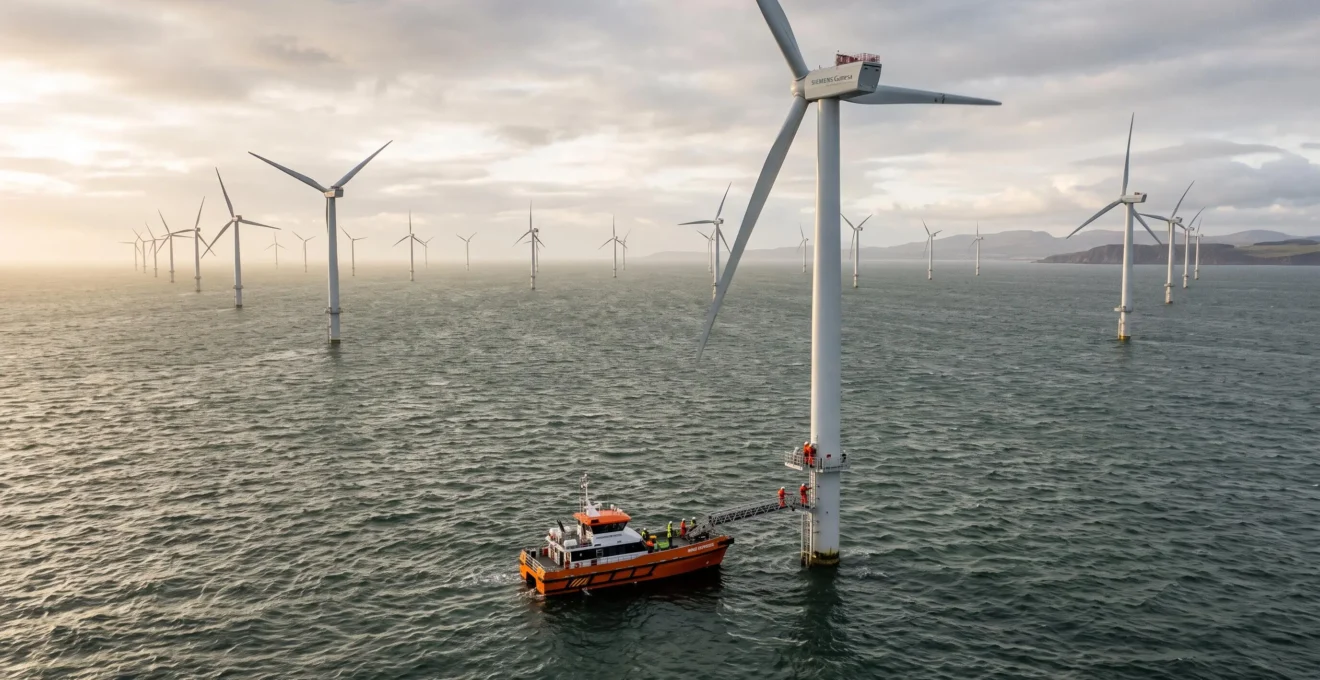
Green finance can create UK-Canada investment opportunities by connecting capital seeking long-term exposure to lower-carbon economic activity with businesses developing renewable energy, electricity networks, industrial decarbonisation and clean technology. The opportunity lies not simply in financing environmentally beneficial assets, but in matching the right funding structure with commercially viable projects operating under different regulatory systems.
The United Kingdom brings established financial markets, infrastructure investment experience and an international investor base. Canada offers substantial energy resources, industrial expertise and opportunities to develop and modernise low-carbon infrastructure. Together, these capabilities can support investments that would be more difficult to originate, finance or deliver within one market alone.
However, climate commitments do not guarantee profitability. Investors must assess revenue certainty, local permits, currency exposure, environmental credibility and the ability to complete projects on schedule. A transaction only becomes a credible green finance opportunity when its environmental objectives, commercial fundamentals and legal structure withstand independent scrutiny.
UK-Canada green finance: the essential investment considerations
- Complementary strengths in capital markets, energy resources and industrial expertise create opportunities in renewable energy, infrastructure and clean technology.
- Project economics depend on contracted revenues, financing structures, regulatory conditions and currency risks—not green credentials alone.
- Environmental verification, local approvals and robust contractual protections are essential before committing cross-border capital.
- Why Is Green Finance Becoming More Important in UK-Canada Investment Strategies?
- How Can Investors Assess a Cross-Border Green Finance Opportunity?
- Green Bond, Fund or Project Finance: Which Structure Fits the Investment?
- The Greenwashing Risks That Can Weaken a Cross-Border Finance Project
- When Should a Green Project Seek UK or Canadian Investment?
- How Can Businesses Evaluate Renewable Energy Opportunities Across Both Markets?
- The Infrastructure Risks That Can Stall a Carbon Capture Project
- Where Are the Strongest UK-Canada Opportunities in Renewable Energy?
Why Is Green Finance Becoming More Important in UK-Canada Investment Strategies?
Green finance is becoming more important in UK-Canada investment strategies because long-term climate commitments, industrial carbon pricing and sustainability-related financial requirements increasingly influence capital allocation. These frameworks can improve the commercial rationale for lower-carbon infrastructure, but they do not eliminate policy uncertainty or automatically make projects bankable. Investors must distinguish durable investment demand from temporary regulatory incentives.
The UK has a legally binding net-zero emissions target for 2050 under the Climate Change Act 2008, supported by successive five-year carbon budgets. According to the UK government guidance on carbon budgets, the sixth carbon budget limits emissions to 965 million tonnes of carbon dioxide equivalent during 2033–2037, while the seventh sets a limit of 535 million tonnes for 2038–2042.
These figures establish a long-term direction for domestic emissions reductions. They do not, by themselves, establish future demand for any particular technology or guarantee private-sector returns.
Canada also maintains a 2050 net-zero objective, but its policy environment differs substantially. Provincial and territorial governments play important roles in industrial emissions regulation and energy markets. The federal consumer fuel charge was removed in April 2025, making it important to distinguish historical carbon-tax arrangements from the industrial pricing systems relevant to investment decisions.
CAD 95/tCO2e
Canada’s updated headline industrial carbon pricing trajectory for 2026. The federal trajectory reaches CAD 130/tCO2e in 2035, subject to the applicable industrial system and policy implementation. These figures are not guaranteed revenues or universal prices paid by every business.
Environment and Climate Change Canada: industrial carbon pricing systems, May 2026 update.
For businesses, green finance can represent either a compliance expense or a route to market access. A manufacturer facing emissions-related costs may invest defensively to protect margins. Another business may develop an energy project supported by a long-term power purchase agreement, creating an identifiable revenue stream from the same decarbonisation transition.
Disclosure requirements and lender expectations can also affect access to capital. In the UK, sustainability reporting obligations depend on the type and regulatory status of the entity; Canadian requirements likewise vary. Neither market should be treated as having one uniform disclosure regime for all companies.
The two financial ecosystems offer complementary capabilities. UK institutions may provide experience in financing mature infrastructure, while Canadian companies can contribute technical expertise, natural resources and project development capacity. Their combination can help bridge gaps between project origination and long-term capital.
Because investment structures can last for decades, climate policy should inform strategic direction without replacing rigorous assessment of project-specific risks and contractual revenues.
How Can Investors Assess a Cross-Border Green Finance Opportunity?
Investors should assess a UK-Canada green finance opportunity through five interconnected tests: environmental eligibility, financial viability, currency exposure, regulatory approvals and counterparty quality. A project should progress only when its emissions claims are supportable, its revenue assumptions are credible and the legal arrangements can withstand delays or adverse market conditions in either jurisdiction.
The first step is to establish precisely what the proposed investment finances. An electricity transmission upgrade, renewable generation facility and industrial carbon capture installation may all contribute to decarbonisation, but they have different environmental boundaries and performance indicators.
Classification requires care. A proposed or developing national taxonomy is not equivalent to a binding, operational eligibility framework. Investors should verify the current status of relevant UK and Canadian sustainable finance taxonomy initiatives rather than assuming their definitions are interchangeable.
Where a transaction uses a voluntary classification, eligibility criteria and supporting evidence should be documented contractually. Disagreement between UK and Canadian assessments is a diligence issue requiring explanation, not a difference that can be ignored for convenience.
Financial analysis should then separate revenue sources according to their certainty:
- Contracted revenue: electricity sales or service payments supported by enforceable agreements, subject to counterparty risk.
- Policy-dependent revenue: incentives, investment tax credits or support payments whose availability depends on programme conditions.
- Environmental-credit revenue: credits or emissions-related payments dependent on verification, eligibility and demand.
- Merchant revenue: income exposed to changing electricity, commodity or service prices.
Currency adds another layer. A Canadian project receiving Canadian-dollar income but servicing sterling-denominated debt can face substantial exchange-rate risk. Over a long operating period, hedging costs and refinancing terms can materially affect investor returns. The financial model should distinguish local-currency performance from hedged and unhedged returns.
Approval risk is equally important. Canadian diligence may require provincial permits, federal authorisations where applicable, assessment of Indigenous rights and consultation obligations, and confirmation of site access. UK projects can depend on planning consent, environmental approvals, grid connections and marine permissions.
Five deliverables for cross-border investment due diligence
- Define the asset’s environmental contribution and prepare a written eligibility assessment identifying the relevant standards and unresolved classification questions.
- Build a project revenue schedule separating contracted, policy-dependent and merchant income, with supporting agreements for each material assumption.
- Prepare a sterling/Canadian-dollar exposure model showing exchange-rate sensitivities and the proposed hedging approach.
- Compile a jurisdiction-specific approvals register covering permits, land rights, Indigenous consultation where relevant and grid or infrastructure access.
- Produce a counterparty and risk-allocation report identifying responsible entities, contractual security, financing dependencies and outstanding conditions precedent.
Once these tests have identified a credible asset, the next decision is how to finance it without taking risks that the investor cannot reasonably control.
Green Bond, Fund or Project Finance: Which Structure Fits the Investment?
Green bonds generally suit issuers able to access debt capital markets and finance eligible activities, funds offer diversified exposure with varying liquidity, and project finance can support individual infrastructure assets through dedicated contractual arrangements. The appropriate structure depends on investment size, cash-flow predictability, investor control, credit risk and the ability to manage construction and refinancing exposure.
Instrument selection should start with the economic characteristics of the underlying investment rather than its sustainability label. A publicly traded green bond and a private infrastructure fund may both finance renewable assets, but they offer substantially different rights and risk profiles.
| Criterion | Green bond | Green investment fund | Project finance |
|---|---|---|---|
| Typical use | Financing or refinancing eligible activities through debt issuance | Investing across a portfolio of qualifying assets or businesses | Financing a defined infrastructure asset or project |
| Investor control | Usually limited to creditor rights | Depends on fund governance and investor status | Can involve negotiated covenants and oversight rights |
| Investment size | Can accommodate institutional-scale participation | Varies widely by vehicle and investor access | Often requires substantial capital and transaction resources |
| Liquidity | Depends on listing and secondary-market demand | Depends on whether the fund is open-ended, listed or closed-ended | Typically limited during development and construction |
| Recourse | Usually linked to issuer obligations | Depends on fund structure and underlying holdings | Frequently limited or non-recourse, subject to negotiated exceptions |
| Reporting | Use-of-proceeds allocation and impact disclosures where applicable | Portfolio reporting and applicable fund-level disclosures | Project-level financial, operational and environmental monitoring |
A green bond is not necessarily independently certified. Alignment with the International Capital Market Association‘s Green Bond Principles is generally voluntary, and third-party reviews vary in scope. The presence of a green label therefore does not guarantee credit quality, measurable impact or attractive pricing.
Unlabelled green loans can also support genuine decarbonisation. Their credibility depends on clearly defined uses of funds, monitoring and contractual commitments rather than on whether the instrument carries a recognised marketing designation.
Cross-border structures introduce tax and governance questions. Withholding taxes, the UK-Canada double taxation treaty, beneficial ownership, permanent establishment considerations and special-purpose vehicles can affect overall investment returns. Their treatment depends on the parties, payments and legal structure and requires professional tax advice.
Refinancing risk deserves particular attention. Development-stage financing may be appropriate during construction but expensive once operations stabilise. A financing plan should identify possible replacement debt, equity exits and maturity mismatches before financial close.
The best financing structure supports the asset throughout its lifecycle while preserving sufficient flexibility if markets, regulations or construction costs change.
The Greenwashing Risks That Can Weaken a Cross-Border Finance Project
Greenwashing can weaken cross-border finance when environmental claims overstate actual emissions benefits, omit material impacts or rely on unverifiable assumptions. For UK-Canada transactions, differences in legal requirements, reporting methodologies and project boundaries can create regulatory and reputational exposure. Investors should require substantiated claims, independent verification where appropriate and contractual remedies for material misrepresentations.
In the UK, the Financial Conduct Authority‘s anti-greenwashing rule took effect on 31 May 2024. As explained in the FCA finalised guidance on the Anti-Greenwashing Rule, sustainability-related claims made within its regulatory scope must be consistent with the characteristics of the product or service and must be fair, clear and not misleading.
This rule does not apply universally to every environmental statement by every UK company. Its application depends on the relevant FCA-authorised firm, product or service and communication.
“fair, clear and not misleading.”
Canada has its own competition-law and environmental-claims framework. Businesses making representations to Canadian audiences should examine the applicable requirements and substantiation standards, particularly where environmental performance or future climate commitments are advertised. A statement acceptable under one jurisdiction’s rules should not automatically be assumed compliant in the other.
One important problem is the emissions boundary gap. An industrial installation may demonstrate lower emissions during its operation while relying on energy-intensive upstream inputs or supporting emissions-intensive downstream activities.
A credible review should therefore identify the full scope of the claim. For example, a carbon capture project might report tonnes of CO2 captured without establishing how much is permanently stored or what additional energy consumption the process requires. Capture performance and net climate benefit are separate analytical questions.
Independent assurance can strengthen credibility, but verification is not a substitute for examining the underlying methodology. Investors should seek:
- Documented environmental baselines and clearly defined measurement boundaries.
- Relevant third-party assurance or second-party opinions specifying what has actually been reviewed.
- Regular allocation and impact reporting supported by auditable evidence.
- Contractual representations concerning material environmental claims and information accuracy.
- Agreed consequences if significant claims are inaccurate or reporting obligations are breached.
The commercial consequences depend on contractual terms and applicable law. A material misrepresentation may lead to disputes, enforcement exposure or reputational damage. Financing consequences such as covenant breaches, changes in borrowing costs or loss of eligibility are possible in particular structures, but they do not arise automatically from every greenwashing finding.
Environmental assurance is most valuable when it is integrated into investment documentation before capital is committed, rather than treated as a reporting exercise after completion.
When Should a Green Project Seek UK or Canadian Investment?
A green project should seek UK or Canadian investment when the prospective capital provider matches its development stage, revenue currency, risk profile and financing needs. Canadian investors may be well positioned for certain domestic development opportunities, while UK institutions may provide capital for established infrastructure. Neither advantage is universal: financing terms, sector expertise and local execution capacity ultimately determine the better source.
Early-stage businesses often need investors prepared to finance technology development, demonstration or first commercial deployment. Their priorities may include patient equity, technical mentoring, strategic partnerships and additional funding rounds rather than immediate cash distributions.
Mature infrastructure assets present a different proposition. Once construction and commissioning risks have been reduced, predictable contracted revenues may appeal to institutions seeking long-duration investments. UK infrastructure investors can be potential counterparties, provided their mandates and return requirements align with the project.
Currency matching should be assessed early. For an asset earning Canadian dollars, Canadian-dollar financing may reduce the need for extensive exchange-rate hedging. However, domestic financing is not necessarily cheaper after accounting for interest rates, credit terms, funding availability and investor requirements.
Government incentives can also affect timing. Canadian clean-energy investment tax credits may improve the economics of qualifying projects, subject to statutory eligibility and compliance requirements. UK mechanisms supporting renewable generation and infrastructure development can influence when investors enter the market.
These programmes are not permanent guarantees. Their availability, allocation conditions and financial value should be checked against current official rules before being included in a binding investment case.
A hybrid strategy may be appropriate where Canadian developers originate and construct an asset and UK institutions provide later-stage capital. Such an arrangement can combine local delivery expertise with an international funding base, but it requires clear governance.
Shareholder agreements, financing documents and project contracts should establish who controls budgets, major procurement decisions, changes in project scope, refinancing and exit arrangements. An investment partner providing substantial capital does not automatically possess the operational knowledge needed to manage the underlying asset.
Illustrative investment scenario: a Canadian renewable energy developer
Consider a hypothetical Canadian developer with a permitted renewable electricity project, a credible construction budget and a proposed long-term power purchase agreement. The developer initially evaluates Canadian lenders because revenues are denominated in Canadian dollars.
It also approaches a UK infrastructure investor interested in acquiring an equity interest after construction. The proposed split could reduce development-stage funding pressure while giving the UK investor exposure to an operational asset. Its viability would depend on negotiated valuation, risk allocation, governance and currency treatment. This is an illustrative scenario, not a documented transaction.
Businesses should prepare a financing strategy that explains why a particular investor can provide better risk-sharing, technical support or capital terms than realistic alternatives.
How Can Businesses Evaluate Renewable Energy Opportunities Across Both Markets?
Businesses should evaluate renewable energy opportunities in the UK and Canada by comparing resource quality, electricity-market economics, grid availability, permitting requirements and delivery capacity. Strong wind, solar or hydro resources are insufficient if a project cannot connect to the network or secure viable revenue. The comparison must be conducted at the relevant provincial or regional market level.
The UK and Canada have structurally different electricity systems. Great Britain’s electricity market operates within a regulatory framework that differs from the arrangements in Northern Ireland, while Canadian electricity regulation and market organisation are substantially provincial.
Consequently, a Canadian national average may conceal the factors most relevant to project profitability. British Columbia, Alberta and Ontario, for example, differ in electricity-market arrangements, transmission infrastructure, procurement practices and administrative requirements.
A suitable comparison should begin with the candidate site’s physical resources and expected generation profile. Investors can then evaluate the commercial environment: who purchases the electricity, how prices are formed, whether congestion is likely and what network upgrades may be required.
Offtake arrangements are particularly important. A corporate power purchase agreement may offer contracted revenues, although its value depends on the counterparty and contract terms. Government-supported procurement mechanisms can provide another route to revenue, while merchant sales expose the project to market price fluctuations.
Financial modelling should cover more than a single expected electricity price. At minimum, investors should examine contracted-price assumptions, merchant-price downside, construction cost overruns, connection delays and periods of lower-than-expected generation.
A project with attractive initial costs can become less competitive if network reinforcement is delayed or essential equipment is unavailable. Turbine delivery, transformers, specialist installation vessels and qualified electrical labour may each introduce schedule dependencies.
Permitting risk needs similarly precise treatment. An authorisation to develop a site does not necessarily confer grid access, land rights or every environmental approval required to start construction. In Canada, the assessment should reflect the relevant provincial framework and any applicable federal requirements, including Indigenous rights and consultation processes.
For cross-border businesses, the strongest practical advantage may lie in transferring operational capabilities. Expertise in engineering, procurement, project management or grid integration can be commercially valuable even where a direct investment in generation assets is unattractive.
Evaluating implementation feasibility alongside projected returns helps prevent capital from being committed to projects whose technical potential exceeds their ability to reach commercial operation.
The Infrastructure Risks That Can Stall a Carbon Capture Project
Carbon capture projects can stall when capture equipment, CO2 transport infrastructure, permanent storage capacity or legal responsibilities are not developed together. Even technically effective capture equipment has limited commercial value without an authorised route to storage. Investors must therefore assess the entire chain, including performance guarantees, network access, long-term liability and the durability of carbon-related revenues.
Carbon capture, utilisation and storage projects involve interconnected but distinct assets. Their investment risks cannot be reduced to one technology assessment or one emissions-reduction estimate.
The first risk concerns capture performance. Equipment must operate within the industrial facility’s actual conditions, with consideration for energy consumption, operating reliability, emissions measurement and integration with existing production processes.
Transport introduces separate constraints. Pipelines, shipping arrangements or other CO2 handling infrastructure need appropriate capacity, technical specifications, permissions and commercial access terms. A capture facility reaching completion before its transport network may face extended periods without its intended operating revenue.
Storage is another critical dependency. Geological characterisation, injection capacity, monitoring obligations and long-term containment require independent technical assessment. The existence of a potentially suitable geological formation does not establish that it is permitted or commercially available for injection.
Commercial arrangements are equally decisive. Project income may depend on payments for captured or stored CO2, industrial service contracts, compliance-cost reductions, qualifying credits or government-backed support. Each mechanism has different eligibility rules, measurement requirements and exposure to policy change.
Canadian projects must also account for provincial rules concerning pore-space rights, storage authorisations, monitoring and post-closure liability. These legal arrangements are not identical across provinces.
The UK has pursued cluster-based carbon capture development involving shared transport and storage infrastructure. Such networks can create potential economies of scale, but they also introduce dependencies between multiple emitters, network operators and storage developers.
Liability allocation should identify which party is responsible for leakage, monitoring, operational interruption and closure obligations, as well as the conditions under which any statutory transfer of responsibility may become available.
Community acceptance deserves attention before construction financing. Pipeline routes, industrial sites and geological storage proposals can raise concerns involving land use, environmental protection and public safety. The scope and legal significance of consultation depend on the location and project.
Investors should review documented engagement, outstanding objections and unresolved consent requirements rather than assume technical feasibility ensures approval. Consultation or litigation delays can affect the financing schedule even when the engineering design is otherwise complete.
A commercially credible carbon capture investment requires a functioning and legally supported chain from the emission source to the final storage arrangement, with financing and responsibilities coordinated throughout.
Key investment takeaways
- Prioritise opportunities where UK and Canadian capabilities are complementary and the proposed transaction has a defined commercial advantage.
- Distinguish established investment-ready assets from technologies or infrastructure corridors that still depend on permitting, policy support or market development.
- Choose investment segments according to capital duration, operational capabilities and acceptable risk—not environmental positioning alone.
Where Are the Strongest UK-Canada Opportunities in Renewable Energy?
The most promising UK-Canada renewable energy opportunities are found where complementary expertise, infrastructure needs and financing capabilities can support viable projects. Offshore wind, electricity-grid services and selected hydrogen supply chains are potential areas of cooperation, while nuclear technology provides a related low-carbon energy investment corridor. Commercial attractiveness depends on project readiness, market demand and execution capacity.
Offshore wind illustrates the value of complementary industrial capabilities. The UK has substantial North Sea experience in offshore wind development, operations and supply chains. Canadian Atlantic and Pacific coastal regions may offer opportunities for related expertise, subject to resource conditions, policy support, marine permissions, electricity demand and transmission access.
The potential is not limited to direct ownership of wind farms. Engineering design, port logistics, subsea installation, maintenance services and specialist equipment can create commercial openings for businesses able to serve developing projects.
Floating offshore wind is another possible area of technology transfer. However, resource potential must be distinguished from commercially permitted projects, contracted offtake and available infrastructure. Investment readiness can vary considerably between locations.
Hydrogen offers a different cross-border proposition. Projects may involve production facilities, electricity supply, industrial users, conversion into transportable derivatives and export infrastructure. The economics depend on production costs, verified emissions intensity, transport arrangements and committed customers.
Export potential should not be confused with established demand. Investors need evidence of credible offtakers, product specifications, delivery capacity and financing arrangements before incorporating international hydrogen sales into base-case revenues.
Electricity-grid infrastructure and related services can offer exposure to decarbonisation without taking direct electricity-generation risk. Transmission development, grid equipment, digital monitoring, engineering and system integration support renewable deployment in both markets, although procurement and regulatory conditions differ.
Small modular reactors and associated nuclear supply chains form a distinctive adjacent low-carbon investment corridor. Nuclear energy is not renewable energy, and its inclusion in sustainable investment classifications depends on applicable rules. Nevertheless, the UK’s and Canada’s civil nuclear expertise makes it relevant when examining bilateral low-carbon industrial cooperation.
The institutional foundation is supported by documented bilateral dialogue. In October 2025, Natural Resources Canada reported discussions involving UK and Canadian government and industry representatives on critical minerals, civil nuclear energy, fusion and strategic investment possibilities. The Canada–UK energy and resource partnership announcement confirms these cooperation priorities without establishing that particular projects have secured financing.
Trade and cooperation frameworks can facilitate business relationships, but they do not automatically establish project eligibility for incentives, remove local approval requirements or guarantee cross-border market access.
The most appropriate investment corridor depends on who is investing:
| Opportunity corridor | Potential commercial advantage | Principal investment conditions |
|---|---|---|
| Offshore and floating wind | Transferable development, engineering and offshore operations expertise | Permits, grid access, infrastructure availability and viable offtake |
| Hydrogen supply chains | Potential coordination of production expertise, industrial demand and logistics | Competitive delivered cost, verified emissions and binding customers |
| Grid infrastructure and services | Equipment, engineering and network modernisation opportunities | Procurement visibility, delivery capacity and regulatory approvals |
| Nuclear and SMR supply chains | Established industrial capabilities and bilateral technical cooperation | Licensing, safety requirements, project financing and customer commitments |
Infrastructure investors with long holding periods may favour assets supported by established contractual revenues. Industrial businesses may find equipment supply, engineering partnerships or technology licensing more appropriate. Growth investors may consider less mature technologies, provided the development risks align with their mandates.
There is no universal ranking because these corridors differ in maturity, capital intensity and their dependence on future regulation. Commercial opportunity should be measured against a specific investor’s ability to fund, deliver and manage the underlying activities.
The practical next step is to shortlist projects or potential partners, establish their actual stage of development and compare financing options using a common set of commercial, regulatory and environmental criteria. This turns bilateral clean-energy cooperation into a disciplined investment process rather than a speculative sector forecast.
Can a UK investor finance a Canadian renewable energy project?
Yes, UK investors can potentially participate through equity, lending, infrastructure funds or other legally available structures. The investment must satisfy applicable Canadian and UK requirements, including relevant securities rules, tax treatment and project authorisations. Currency exposure and governance rights should be addressed before commitment.
Does a green bond guarantee a lower-risk investment?
No. A green bond’s environmental designation does not eliminate issuer credit risk, interest-rate sensitivity, refinancing exposure or potential losses. Investors must assess the issuer’s financial strength, bond terms, use-of-proceeds commitments and quality of environmental reporting separately.
Are UK and Canadian sustainable investment classifications interchangeable?
No. The countries have different regulatory frameworks, and the status and coverage of sustainable finance classification initiatives can change. Investors should identify the actual standards relevant to each transaction, verify their current legal status and document any differences rather than assuming equivalent eligibility.
How should foreign-exchange risk be managed in a UK-Canada green investment?
Investors should identify the currencies of project revenues, operating expenses, financing obligations and expected distributions. Matching funding with revenue currency can reduce some exposure, while hedging instruments may address remaining risks. Hedging costs, maturity limitations and adverse exchange-rate scenarios should be reflected in the investment model.
What evidence is needed before financing a low-carbon infrastructure project?
The investment file should contain a credible financial model, evidence supporting environmental claims, appropriate permits and land rights, documented revenue arrangements, a construction and operational risk assessment, and sufficiently detailed counterparty information. Independent technical, legal, tax and environmental reviews may be necessary depending on the project’s scale and complexity.